
What's Happening?
NASA has announced significant changes to its Artemis Moon landing program, introducing a preparatory step to test commercial landers in Earth's orbit in 2027, a year before the planned crewed missions to the lunar surface in 2028. This adjustment aims
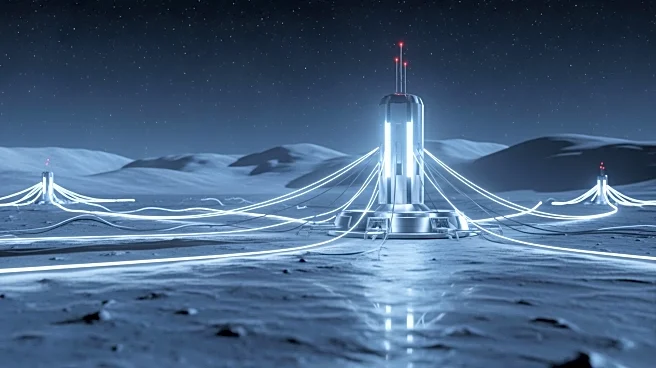
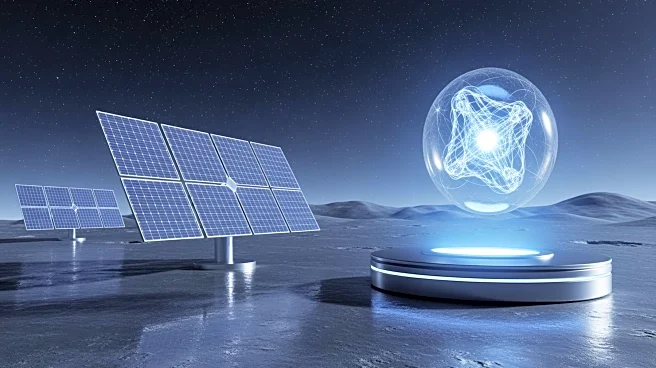
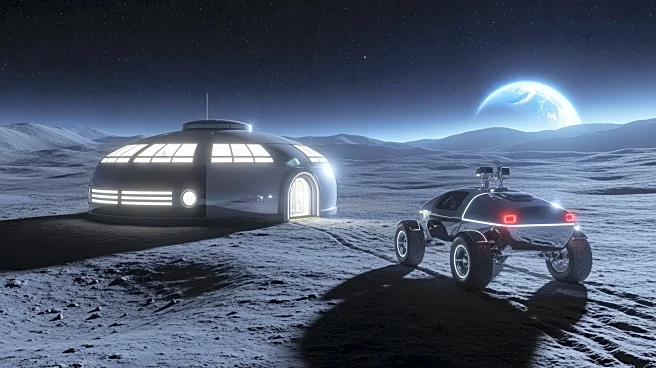
to mitigate risks following recent delays and safety concerns. Concurrently, PwC's Lunar Market Assessment projects the Moon economy to generate $127.3 billion in revenue by 2050, emphasizing the importance of solar energy systems. However, experts like Mihails Ščepanskis, CEO of Deep Space Energy, caution that solar power alone will not suffice for sustainable lunar operations due to the Moon's challenging conditions, such as prolonged lunar nights. Alternative energy solutions, including nuclear power, are being considered to ensure reliable energy for lunar missions.
Why It's Important?
The developments in NASA's Artemis program and the Moon economy projections underscore the growing interest in lunar exploration and its economic potential. The focus on energy solutions is critical, as reliable power sources are essential for long-term lunar operations, including resource exploration and commercial activities. The shift towards nuclear energy, with NASA and the US Department of Energy planning a lunar surface fission reactor by 2030, highlights the need for diverse energy strategies. This has implications for international space competition, as other countries like Russia also explore nuclear-powered lunar stations. The success of these initiatives could pave the way for a sustainable presence on the Moon, influencing future space policies and commercial ventures.
What's Next?
As NASA and other space agencies continue to develop energy solutions for the Moon, the focus will likely remain on balancing solar and nuclear power to support both stationary bases and mobile operations. The upcoming tests of commercial landers in Earth's orbit will provide valuable insights into the feasibility of these technologies. Additionally, the development of compact, non-solar energy systems, such as radioisotope-based power systems, will be crucial for enabling mobility on the lunar surface. The progress in these areas will determine the pace and scope of future lunar missions and the realization of the Moon economy's potential.
Beyond the Headlines
The push for a Moon economy and sustainable lunar operations raises ethical and environmental considerations. The extraction of lunar resources and the deployment of nuclear technology on the Moon could have long-term impacts on the lunar environment. These developments also reflect broader geopolitical dynamics, as countries vie for leadership in space exploration. The collaboration and competition among nations in developing lunar infrastructure could shape international space law and governance. As the Moon becomes a focal point for scientific and commercial activities, the need for clear regulations and cooperative frameworks will become increasingly important.