






What's Happening?
Roseburg-based Lone Rock Logging has been recognized as Southwest Oregon's 2026 Operator of the Year by the Oregon Department of Forestry (ODF). This award acknowledges the company's exceptional commitment to protecting natural resources during timber
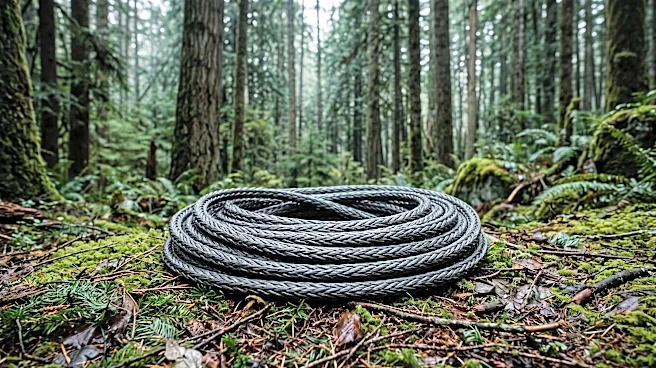
harvesting operations, particularly in adherence to the Oregon Forest Practices Act. Lone Rock Logging was specifically lauded for its careful planning and execution in areas requiring additional protections, such as wider buffers along streams and restrictions on equipment near fish-bearing waterways. The company successfully navigated challenging terrain, moving harvested timber while preserving standing trees and minimizing environmental impact. Techniques included strategic log placement for cable equipment and testing lighter synthetic cables to reduce damage to retained trees. Additionally, C and M Timberland Resources of Glide received a Merit Award for its work in stream protection and erosion prevention.
Why It's Important?
This recognition highlights the increasing importance of sustainable forestry practices in the U.S., especially in regions like Oregon where the timber industry is a significant economic driver. Lone Rock Logging's award demonstrates that economic activity and environmental stewardship can coexist, setting a precedent for other logging companies. Adherence to and exceeding the Oregon Forest Practices Act, which regulates timber harvesting, road construction, and reforestation, is crucial for maintaining ecological balance, protecting water quality, and preserving wildlife habitats. The ODF's emphasis on companies that adapt to newer, more stringent regulations underscores a broader shift towards environmentally conscious resource management. This commitment helps ensure the long-term viability of forest ecosystems and the timber industry, benefiting both the environment and the regional economy of Douglas County.
What's Next?
Lone Rock Logging, along with other regional award recipients, is scheduled to be formally recognized during the Oregon Board of Forestry's January 2027 meeting in Salem. This event will likely further publicize their innovative and environmentally responsible logging techniques, potentially encouraging wider adoption of similar practices across the state and beyond. The ODF will continue to monitor and update the Oregon Forest Practices Act, reflecting new scientific findings and evolving forest management practices. This ongoing adaptation will likely lead to further advancements in sustainable logging, with companies like Lone Rock Logging serving as models for how to meet and exceed these standards. The continued testing of technologies like synthetic cables could also lead to more widespread use, further reducing environmental impact in future operations.
Beyond the Headlines
The recognition of Lone Rock Logging goes beyond a simple award; it signifies a cultural and operational shift within the logging industry towards greater environmental accountability. The use of advanced planning and innovative equipment, such as synthetic cables, reflects a proactive approach to mitigating the environmental footprint of timber harvesting. This development has broader implications for the perception of the logging industry, moving it from a purely extractive model to one that integrates conservation and sustainability. Ethically, it reinforces the idea that industries reliant on natural resources have a responsibility to protect and preserve those resources for future generations. Legally, it underscores the effectiveness of regulations like the Oregon Forest Practices Act in driving positive change and encouraging best practices within the industry.