





What's Happening?
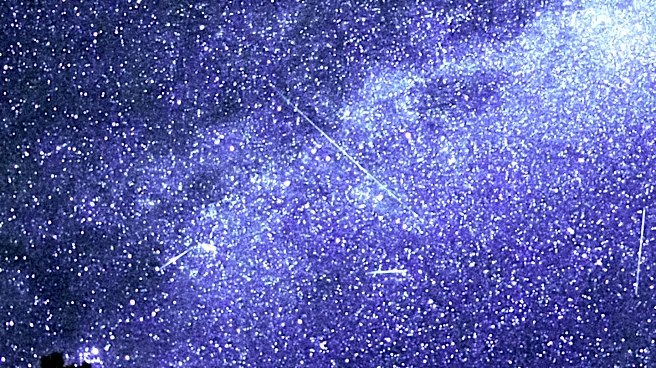
The Perseid meteor shower is scheduled to peak on August 12-13, 2026, offering excellent viewing conditions due to a new moon, which will ensure dark skies. This annual shower, originating from Comet Swift-Tuttle, is a highly anticipated celestial event.
While the source primarily discusses viewing conditions in India, it highlights the general optimal conditions for the Perseids globally. The shower is known for producing a significant number of meteors, with expectations of 60-100 meteors per hour in ideal locations. The main challenge for observers in certain regions, such as India, is the monsoon season, which can obscure views. However, locations with clearer skies during this period, like Ladakh and Spiti Valley, are recommended for optimal observation. The Geminids meteor shower, occurring on December 13-14, is also noted as a reliable and spectacular event, capable of producing up to 120 meteors per hour.
Why It's Important?
The Perseid meteor shower's peak with a new moon in 2026 is significant for both amateur and professional astronomers, as well as the general public. Optimal dark sky conditions enhance the visibility of meteors, making the event more accessible and impactful for a wider audience. This can stimulate public interest in astronomy and science education. For astrotourism, such events are crucial, driving visitors to dark-sky locations and supporting local economies that cater to stargazers. The mention of specific challenges like monsoon seasons in certain regions also highlights the importance of geographical and meteorological considerations in astronomical observation, influencing travel and viewing plans. The comparison with the Geminids underscores the variety and predictability of meteor showers, allowing for long-term planning of astronomical events.
What's Next?
Individuals interested in observing the Perseid meteor shower in August 2026 should begin planning their viewing locations, prioritizing areas with minimal light pollution and clear skies. Given the optimal conditions, demand for astrotourism packages and dark-sky accommodations may increase. Observers are advised to prepare with essentials such as comfortable seating, warm clothing, and red-light torches to preserve night vision. Following the Perseids, attention will shift to other major meteor showers, particularly the Geminids in December, which are also expected to offer excellent viewing opportunities. Astronomical organizations and tour operators will likely continue to provide guidance and organize events to facilitate public viewing of these celestial spectacles.
Beyond the Headlines
The Perseid meteor shower, a recurring cosmic display, offers a profound connection to the solar system's dynamics and the remnants of cometary activity. The dust particles that create these meteors are ancient, providing a glimpse into the material that formed our solar system. This event serves as a powerful reminder of the continuous processes occurring in space, far beyond Earth's immediate environment. The emphasis on dark skies for optimal viewing also highlights a growing global concern for light pollution and its impact on both astronomical research and the human experience of the night sky. Preserving dark sky environments is not just about seeing more stars; it's about maintaining a connection to our cosmic heritage and fostering a sense of wonder that can inspire future generations in scientific exploration and environmental stewardship.