

What's Happening?
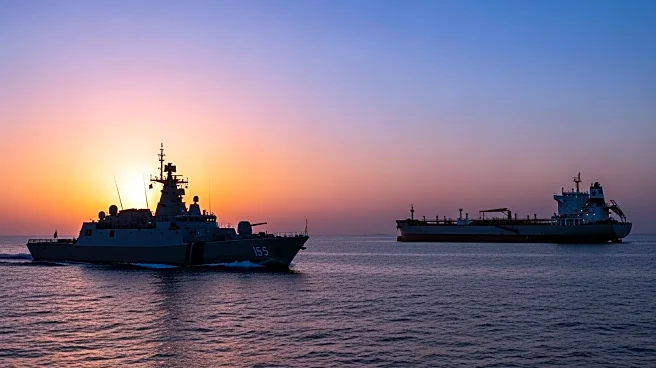
The French navy intercepted a Russian tanker, named the GRINCH, in the Mediterranean Sea, suspected of being part of a 'shadow fleet' that facilitates Russia's oil exports despite international sanctions. The operation, supported by several allies, was
conducted in compliance with the United Nations Convention on the Law of the Sea. The tanker, sailing under a Comoros flag, was traveling from Murmansk, Russia, and is believed to be operating under a false flag. French President Emmanuel Macron stated that the activities of such fleets contribute to financing Russia's war against Ukraine. The case has been referred to the prosecutor of Marseille for further investigation. The Russian consulate in Marseille is investigating whether Russian citizens are among the crew members.
Why It's Important?
This interception highlights the ongoing international efforts to enforce sanctions against Russia, particularly in the context of its ongoing conflict with Ukraine. The operation underscores the challenges faced by Western nations in curbing Russia's ability to circumvent sanctions through shadow fleets. The interception could strain diplomatic relations between France and Russia, as Moscow was not notified about the operation. The incident also reflects broader geopolitical tensions and the complexities of enforcing international sanctions in maritime contexts. The involvement of multiple countries in the operation indicates a coordinated international stance against Russia's sanction evasion tactics.
What's Next?
The intercepted tanker is currently under investigation by French authorities, and further legal actions may follow depending on the findings. The situation could lead to increased scrutiny and monitoring of vessels suspected of being part of Russia's shadow fleet. Additionally, there may be diplomatic repercussions, with Russia potentially responding to the interception. The international community may also consider strengthening maritime sanctions enforcement to prevent similar incidents. The outcome of the investigation could influence future maritime security operations and international relations concerning sanctions enforcement.