



What's Happening?
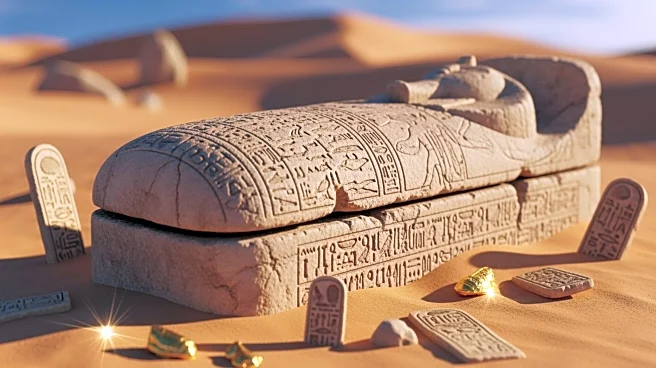
Archaeologists in Egypt have made a groundbreaking discovery in an ancient royal tomb at Tanis, unearthing a treasure trove of 225 funerary figurines. These artifacts, arranged in a ceremonial pattern, were found in a tomb believed to belong to Pharaoh
Shoshenq III, who reigned from 830 to 791 BC. The tomb, however, was notably empty of a body, raising questions about the burial practices during Egypt's Third Intermediate Period. This discovery is significant as it is the first time in nearly 80 years that such figurines have been found undisturbed in a royal tomb at Tanis. The presence of a large number of female figurines is particularly unusual, suggesting new insights into the funerary customs of the time.
Why It's Important?
The discovery of these figurines is pivotal as it challenges existing assumptions about ancient Egyptian burial practices and the political dynamics of the Third Intermediate Period. The absence of Pharaoh Shoshenq III's body in the tomb raises questions about the succession and burial traditions of the era, potentially indicating political instability or changes in royal burial customs. This find not only enriches the understanding of Egyptian history but also highlights the complexities of archaeological research, where new discoveries can significantly alter historical narratives.
What's Next?
Following the discovery, the figurines will be studied and eventually displayed in an Egyptian museum, providing the public with a rare glimpse into ancient Egyptian burial practices. The archaeological community will likely continue to investigate the site to uncover more about the political and cultural context of the period. This discovery may prompt further exploration of other tombs in the region, potentially leading to more revelations about Egypt's past.