




What's Happening?
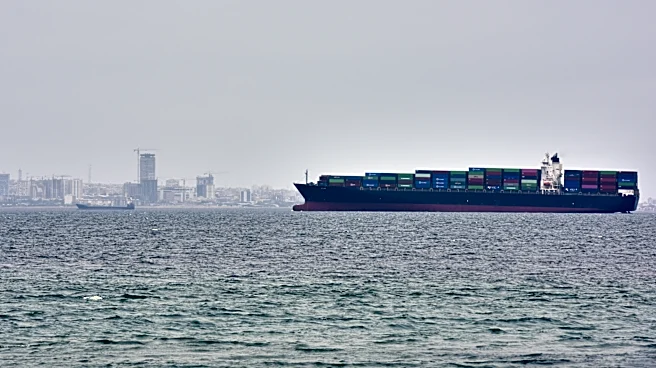
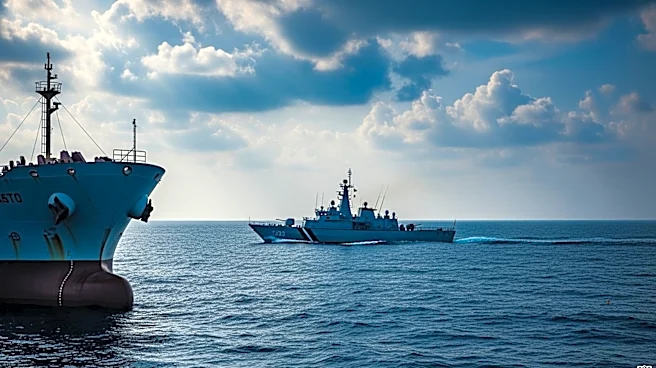
The U.S. Central Command has reported the interception of a merchant vessel, identified as the Sevan, in the Arabian Sea. This vessel was part of a 'shadow fleet' of 19 ships transporting Iranian oil and gas products to international markets. The interception was carried
out by a U.S. Navy helicopter from the guided-missile destroyer USS Pinckney. The Sevan is now complying with U.S. military directives to return to Iran under escort. This action is part of a broader U.S. effort to enforce sanctions on Iran, which includes a blockade that has redirected 37 ships to date. The blockade and subsequent interceptions are part of ongoing tensions involving Iran's energy exports, which have been sanctioned by the U.S. Treasury Department.
Why It's Important?
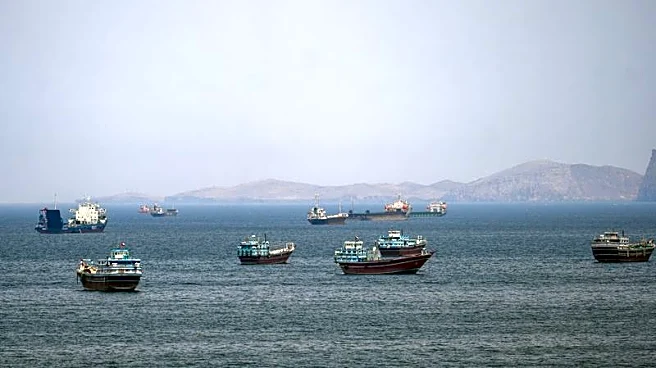
The interception of the Sevan highlights the ongoing geopolitical tensions in the Strait of Hormuz, a critical chokepoint for global oil and gas supplies. The blockade and sanctions are part of U.S. efforts to curb Iran's energy exports, which have significant implications for global energy markets. The situation has prompted discussions between international leaders, including U.S. President Trump and British Prime Minister Keir Starmer, about the urgent need to restore shipping in the region. The blockade has already led to concerns about potential global energy shortages, as emphasized by French President Emmanuel Macron and TotalEnergies CEO Patrick Pouyanne. The continued disruption in the Strait of Hormuz could exacerbate energy scarcity, affecting economies worldwide.
What's Next?
Efforts are underway to reopen the Strait of Hormuz and restore normal shipping operations. French President Macron has expressed a commitment to achieving a full reopening in accordance with international law. Meanwhile, more than a dozen countries have expressed willingness to join an international mission led by France and Britain to protect shipping in the strait. The outcome of these diplomatic and military efforts will be crucial in determining the future stability of global energy supplies and the geopolitical landscape in the Middle East.