






What's Happening?
United States Representative Jimmy Panetta (CA-19) has announced $2,368,257 in federal funding for the construction of a new replacement terminal at Monterey Regional Airport (MRY). This grant, provided through the Federal Aviation Administration’s (FAA)
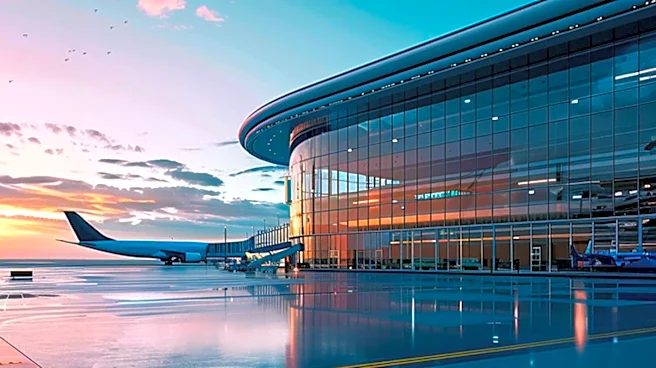
Airport Improvement Program, will specifically cover the design team's inspection activities during Phase 7 of the project. The new terminal is planned to be a 62,754-square-foot public space featuring five gates and passenger boarding bridges. The existing terminal, which opened in 1950, needs to be replaced to accommodate federally mandated operational safety enhancements for Taxiway A, which connects to the airport’s primary commercial runway. The new design emphasizes accessibility, ease of navigation for passengers, and the ability to meet growing demand, while also incorporating sustainable materials and aiming to be zero-net-energy ready, reflecting the Monterey region's environmental values. This funding builds on previous efforts by Rep. Panetta, who has secured over $69 million in federal funding for the airport's modernization, including terminal design, tarmac improvements, and other safety upgrades.
Why It's Important?
This federal investment is crucial for enhancing the infrastructure and operational capabilities of Monterey Regional Airport, which serves as a vital hub for residents, visitors, and the local economy in California’s 19th Congressional District. The modernization will improve safety, efficiency, and accessibility, directly benefiting millions of passengers. For the region, a modern airport terminal supports tourism, local businesses, and overall economic activity. The project's focus on sustainability, with its goal of being zero-net-energy ready and using sustainable materials, aligns with broader environmental initiatives and could serve as a model for future airport developments. The FAA's Airport Improvement Program, through which this grant was awarded, plays a significant role in strengthening the nation's aviation infrastructure by funding essential projects like runways, taxiways, and terminal upgrades. This investment underscores the federal government's commitment to maintaining and improving critical transportation assets across the U.S., ensuring that regional airports can effectively meet current and future demands.
What's Next?
The federal funding will enable the Monterey Regional Airport to proceed with Phase 7 of the new terminal construction, specifically covering the design team's inspection activities. This ensures that the project maintains its timeline and adheres to design specifications and safety standards. The airport's Executive Director, Chris Morello, highlighted that this additional funding will help deliver critical infrastructure improvements and enhance the travel experience. The ongoing construction will continue to focus on creating a modern, accessible, and efficient terminal that can accommodate the airport's growing demand. Future steps will involve the continued oversight of the construction process, ensuring the integration of sustainable features, and ultimately the completion and opening of the new terminal. The success of this project could also pave the way for further federal investments in similar regional infrastructure projects across the country, as the FAA continues to support aviation infrastructure development.
Beyond the Headlines
The investment in Monterey Regional Airport extends beyond immediate infrastructure improvements, reflecting a broader trend of federal commitment to regional economic development and sustainable practices. By modernizing the airport, the federal government is not only addressing immediate operational needs but also fostering long-term economic resilience in the region. The emphasis on a zero-net-energy ready design and sustainable materials sets a precedent for environmentally conscious infrastructure projects, potentially influencing future airport developments nationwide. This approach demonstrates a recognition that infrastructure investments can simultaneously boost economic activity and contribute to environmental stewardship. Furthermore, the project highlights the critical role of federal grants in supporting local and regional economies, particularly in areas where local funding might be insufficient for large-scale, essential upgrades. The improved accessibility and efficiency of the new terminal will also enhance the overall quality of life for residents and visitors, making the region more attractive for both tourism and business.