




What's Happening?
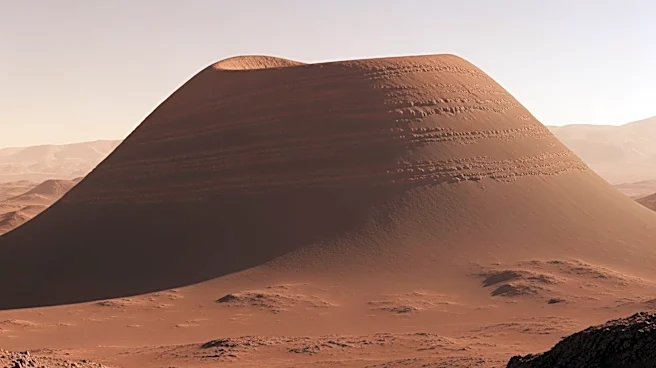
Olympus Mons, located on Mars, is the largest known volcano in the solar system. It rises approximately 22 kilometers above the surrounding plains, with a base covering an area equivalent to the state of Arizona. This shield volcano's gentle slopes are a result
of repeated low-viscosity lava flows. The absence of plate tectonics on Mars and its lower gravity have allowed Olympus Mons to grow to its immense size over billions of years. The summit features a complex of overlapping calderas, and the base is surrounded by a steep escarpment, the origins of which are still debated among scientists.
Why It's Important?
The study of Olympus Mons provides valuable insights into volcanic activity and geological processes on Mars, which differ significantly from those on Earth. Understanding these processes can help scientists learn more about the planet's history and its potential for past or present life. The size and structure of Olympus Mons challenge our understanding of volcanic formation and stability, offering a unique opportunity to study planetary geology in a different gravitational and tectonic context. This knowledge is crucial for future Mars exploration missions and could inform the search for habitable environments beyond Earth.
What's Next?
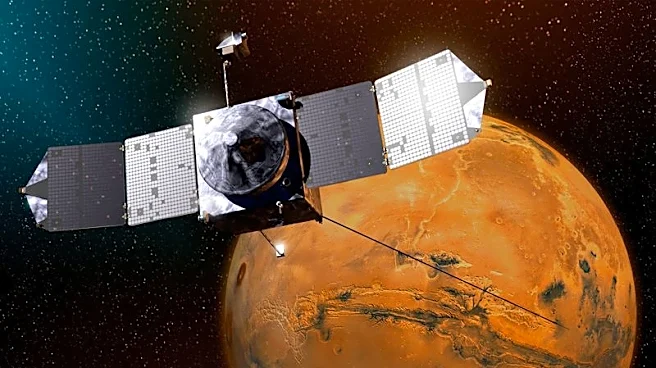
Future Mars missions are expected to further investigate Olympus Mons to determine its volcanic history and assess the potential for future eruptions. These missions may include detailed mapping and sampling of the volcano's surface and subsurface. Understanding the geological activity on Mars is essential for planning human exploration and potential colonization, as it could impact the safety and sustainability of long-term missions. Continued research may also reveal more about the planet's climate history and its capacity to support life.