






What's Happening?
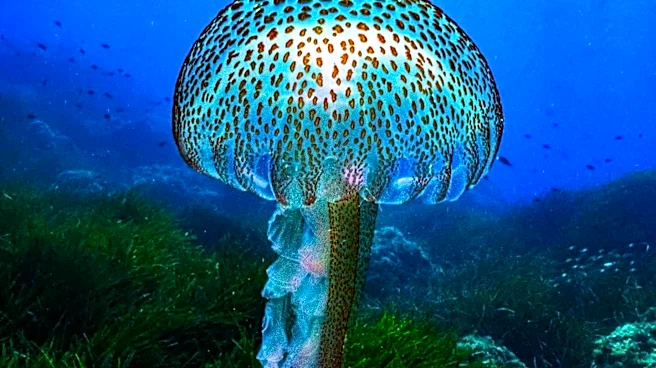
A species of jellyfish, *Turritopsis dohrnii*, commonly known as the "immortal jellyfish," is spreading across the world's oceans. Originally from the Mediterranean, this tiny creature, about the size of a pinky nail, has been observed in various global
waters, likely transported via the ballast water of cargo ships. What makes this jellyfish unique is its ability to reverse its aging process. When faced with stress, injury, or old age, it can undergo a process called transdifferentiation. During this process, its mature adult cells revert to an earlier, more basic cell type, and the jellyfish reorganizes itself back into its polyp (baby) form, effectively restarting its life cycle. Scientists have observed this phenomenon in laboratory settings and believe there is no inherent limit to how many times it can perform this regeneration. While it can still die from predation, disease, or severe physical injury, it does not appear to die of old age.
Why It's Important?
The unique biological mechanism of the *Turritopsis dohrnii* holds significant importance for aging research and regenerative medicine. Scientists are intensely studying its cellular reprogramming process to uncover clues about how it effectively turns back its biological clock. Understanding this process could provide invaluable insights into the fundamental biology of aging, a field with substantial implications for human health and longevity. While humans are far more complex organisms, any discovery that sheds light on cellular regeneration and the reversal of aging could potentially lead to breakthroughs in treating age-related diseases, developing new regenerative therapies, and even extending human lifespan. The anti-aging industry is a multi-billion dollar market, and any scientific advancement in this area could have profound economic and societal impacts, offering new avenues for medical treatments and pharmaceutical development.
What's Next?
Researchers will continue to investigate the cellular and molecular mechanisms behind the *Turritopsis dohrnii*'s transdifferentiation process. Future studies will likely focus on identifying the specific genes, proteins, and environmental triggers that enable this jellyfish to revert to its juvenile state. The goal is to understand if any of these mechanisms can be translated or adapted for use in human medicine. This could involve exploring potential applications in regenerative therapies for damaged tissues or organs, or in developing new strategies to combat the effects of aging. The ongoing global spread of the jellyfish also necessitates further ecological monitoring to understand its impact on marine ecosystems, although the primary focus remains on its unique biological properties for scientific research.
Beyond the Headlines
The existence of the "immortal jellyfish" challenges fundamental biological assumptions about life and death, prompting deeper philosophical and ethical considerations. Its ability to essentially reset its life cycle raises questions about the definition of an individual organism and the inevitability of aging. From an ethical standpoint, if similar regenerative capabilities could ever be partially replicated in humans, it would open complex debates about the societal implications of extended lifespans, resource allocation, and the potential for exacerbating existing inequalities. Culturally, the concept of biological immortality has long been a subject of myth and fiction, and the reality of a creature possessing such a trait could inspire new perspectives on our place in the natural world and the boundaries of biological possibility. This phenomenon underscores the vast, unexplored potential within nature for scientific discovery and the profound impact such discoveries can have on human understanding and aspirations.