






What's Happening?
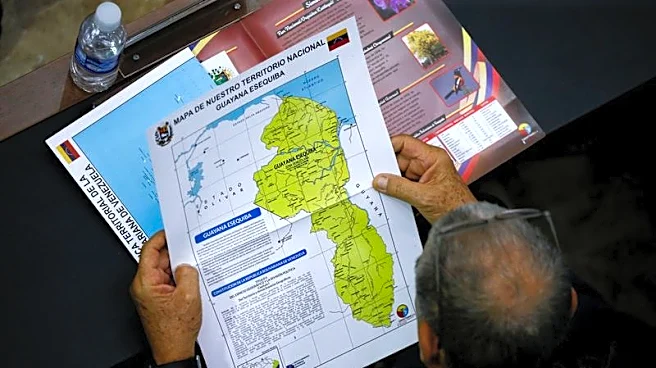
Venezuela has presented its case to the International Court of Justice (ICJ), arguing that the mineral-rich Essequibo region of Guyana was fraudulently taken during the colonial era. The dispute centers on an 1899 arbitration decision that favored Guyana,
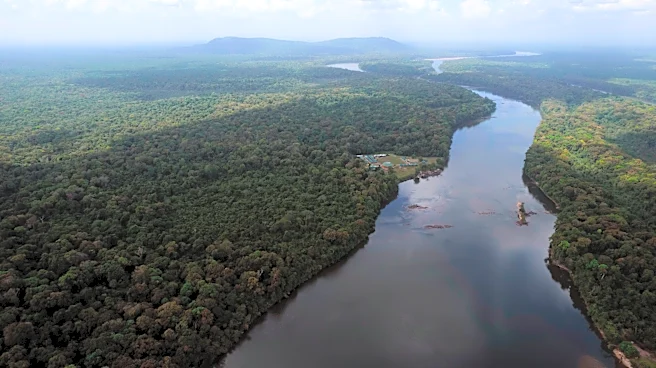
which Venezuela claims was manipulated by American and European arbitrators. Venezuela insists that a 1966 agreement, rather than the ICJ, should determine the rightful ownership of the territory. The Essequibo region is rich in natural resources, including gold and diamonds, and is near significant offshore oil deposits. Venezuela's representative, Samuel Reinaldo Moncada Acosta, argued that the 1966 Geneva Agreement was intended to rectify the historical injustice of colonial dispossession. Guyana, on the other hand, maintains that the dispute has hindered its sovereignty since its inception as a state.
Why It's Important?
The outcome of this legal battle could have significant implications for the geopolitical landscape in South America, particularly concerning resource control and economic development. The Essequibo region's wealth in natural resources makes it a highly valuable asset for either country. A ruling in favor of Venezuela could alter existing economic and diplomatic relations in the region, potentially affecting international investments and partnerships. Conversely, a decision favoring Guyana could solidify its territorial claims and enhance its economic prospects, especially in the oil sector. The case also highlights broader issues of colonial legacy and territorial disputes, which remain contentious in international relations.
What's Next?
The ICJ is expected to take several months to reach a final decision, which will be legally binding. Both countries are likely to continue diplomatic efforts to sway international opinion and prepare for the potential economic and political ramifications of the court's ruling. The decision could prompt reactions from neighboring countries and international stakeholders, particularly those with economic interests in the region's resources. The case may also influence future territorial disputes globally, setting a precedent for how colonial-era agreements are interpreted in modern international law.