



What's Happening?
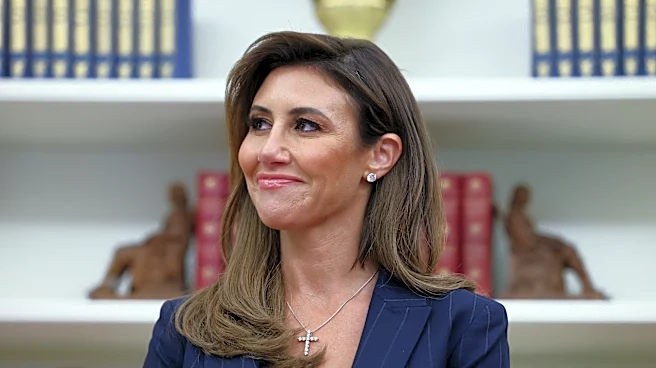
Alissa Ellman, the Democratic nominee for New York's 24th Congressional District, is campaigning on a platform of progressive populism, focusing on the economic concerns of rural and Rust Belt communities. Ellman, a 42-year-old Army veteran who served
in Afghanistan and battled cancer linked to toxic burn pits, emphasizes direct, human-centered discussions about issues like the rising cost of electricity, interest rates, food, and gas. She advocates for practical solutions rather than political buzzwords. Her opponent is Representative Claudia Tenney, described as an ultra-MAGA member of the state's House delegation, whose legislative priorities include making President Trump's birthday a national holiday. Ellman's political journey began after she was among the first federal workers fired by Elon Musk and DOGE in February 2025. Subsequently, Senate Minority Leader Chuck Schumer invited her as his symbolic guest to President Trump's State of the Union speech, leading to national media attention. She claims that Trump administration officials later offered her job back on the condition that she cease speaking to the press, to which she responded by deciding to run for Congress.
Why It's Important?
Ellman's campaign is significant as it tests the viability of progressive populism in traditionally conservative or swing districts within the Rust Belt. Her focus on tangible economic issues, such as utility costs and the affordability of daily life, rather than abstract political rhetoric, could resonate with a broader electorate that feels overlooked by mainstream political discourse. Her background as a veteran and a former federal worker who faced personal health challenges and job loss provides a unique narrative that may appeal to working-class voters. A victory for Ellman could indicate a shift in how Democratic candidates approach rural and industrial areas, potentially offering a blueprint for regaining congressional control. Conversely, her defeat would highlight the continued challenges for progressive candidates in these regions, especially against incumbents closely aligned with President Trump's base. The outcome of this race could influence national Democratic strategy for future elections, particularly in districts where economic anxieties are paramount.
What's Next?
The immediate next step for Alissa Ellman's campaign is the upcoming election in November, where she will face Representative Claudia Tenney. Her campaign will likely continue to emphasize her populist message and personal story to connect with voters across the sprawling 24th Congressional District. The effectiveness of her strategy in mobilizing rural New Yorkers around economic issues will be closely watched. Following the election, the results will be analyzed to determine whether her approach can be replicated in other Rust Belt and rural areas. Political strategists and parties will likely study the dynamics of this race to understand voter sentiment and adapt their outreach efforts for future electoral cycles. The outcome will also indicate the strength of President Trump's influence in these districts through his allies in Congress.
Beyond the Headlines
Beyond the immediate electoral implications, Ellman's campaign touches on deeper societal issues, including the economic struggles faced by many in the Rust Belt and the impact of political polarization on local communities. Her emphasis on 'talking like a human being' rather than an 'MSNBC host' highlights a growing public fatigue with perceived elitism and abstract political debates, suggesting a desire for more grounded and relatable political leadership. Her experience with the VA and her fight against cancer due to burn pit exposure also brings attention to veterans' healthcare and environmental justice issues, which often disproportionately affect working-class communities. The race also underscores the ongoing challenge of bridging the urban-rural divide in American politics and the potential for populist movements, whether progressive or conservative, to tap into widespread economic discontent. The success or failure of her campaign could signal a broader trend in how voters prioritize economic well-being versus cultural and ideological affiliations.