
What's Happening?
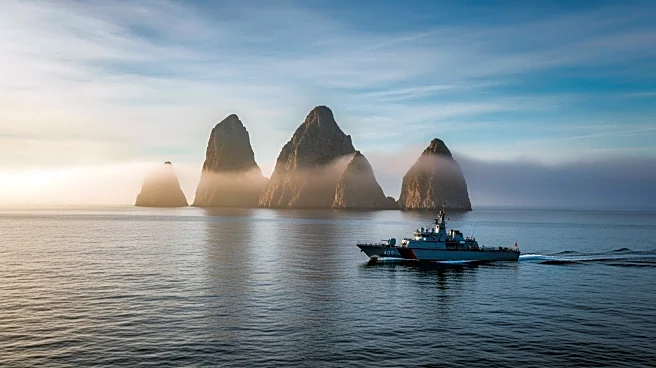
Japan is set to enhance its coast guard patrols around the disputed Senkaku Islands in response to China's growing presence in the area. Prime Minister Sanae Takaichi announced plans to deploy larger patrol boats
and strengthen cooperation with regional partners, including the U.S., to maintain a 'free and open Indo-Pacific.' The Senkaku Islands, also claimed by China and Taiwan, have been a point of contention since Japan nationalized them in 2012. The islands are believed to hold significant oil and natural gas reserves, adding to their strategic importance. Recent reports indicate an increase in the number and size of Chinese vessels patrolling the area, raising concerns about potential escalations.
Why It's Important?
The situation around the Senkaku Islands is a critical issue for regional security and U.S. interests in the Indo-Pacific. The U.S.-Japan Security Treaty covers these islands, meaning any conflict could involve American forces. The increased patrols by Japan signal a firm stance against China's assertive territorial claims, which could lead to heightened tensions in the region. This development is crucial for U.S. foreign policy as it seeks to balance relations with China while supporting allies like Japan. The potential for resource exploitation in the area also has economic implications, making the stability of this region vital for global energy markets.
What's Next?
Japan's decision to increase patrols may lead to further diplomatic engagements with China to prevent military confrontations. The U.S. and its allies might also engage in joint military exercises to demonstrate their commitment to regional security. Monitoring the situation will be essential to anticipate any shifts in China's strategy or potential provocations. Additionally, Japan may continue to bolster its defense capabilities and seek stronger alliances with other regional powers to counterbalance China's influence.