What's Happening?
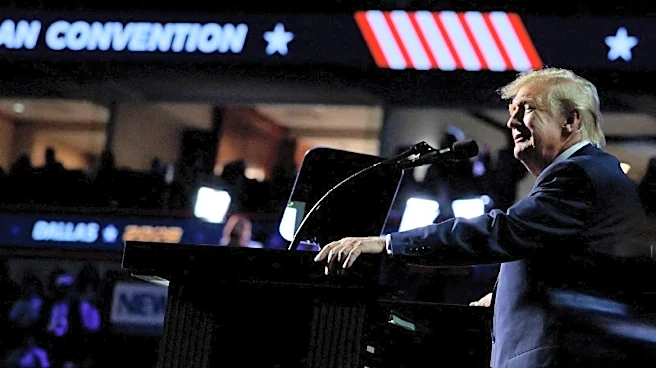
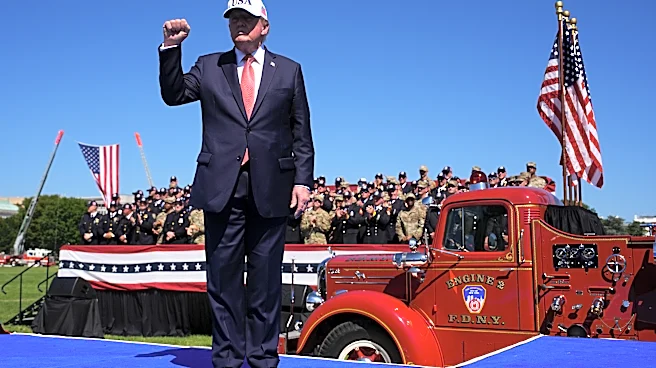
President Trump has offered multiple, often conflicting, accounts of his experiences during and immediately after the September 11, 2001, terrorist attacks. During a recent ceremony honoring first responders and victims' families, President Trump described
taking a construction crew to Ground Zero shortly after the attacks, a claim he later clarified to be 'shortly thereafter' and not on the same day as the collapse. He also recounted a dramatic story of being lifted and carried out of the 'creaking' U.S. Steel Building (now One Liberty Plaza) by two firefighters, an account that lacks corroboration. Previously, President Trump has claimed to have watched the second plane hit the World Trade Center from his Trump Tower apartment and to have personally seen people jumping from the Twin Towers, despite not mentioning these details in a live broadcast on 9/11. He also famously claimed to have witnessed thousands of Muslims celebrating in New Jersey, a claim that has been widely disproved. These varying narratives have been tracked by reporters for over a decade, highlighting inconsistencies in his recollections of one of the most catastrophic days in American history.
Why It's Important?
The repeated embellishment and alteration of President Trump's 9/11 narrative are significant because they touch upon issues of historical accuracy, public trust, and the political implications of misleading statements. For many Americans, 9/11 is a deeply personal and traumatic event, and the integrity of public figures' recollections of that day is often held to a high standard. Critics argue that such shifting accounts, particularly concerning a national tragedy, can erode public confidence in political leaders and historical narratives. While other presidents might face severe political repercussions for similar exaggerations, President Trump has historically not paid a significant political price for such statements. This pattern raises questions about the evolving standards of political discourse and accountability in the U.S. The focus on his personal involvement also diverts attention from the victims, first responders, and the broader impact of the attacks, potentially reshaping the collective memory of 9/11.
What's Next?
Given President Trump's history, it is likely that his accounts of 9/11 will continue to be a subject of discussion and scrutiny, particularly as the anniversary of the attacks approaches each year. Presidential historians, journalists, and political opponents will likely continue to highlight discrepancies in his narratives. The White House's response, as seen in a recent statement from spokesperson Davis Ingle, suggests a strategy of framing President Trump's remarks as 'relaying his experience of a city reeling,' rather than directly addressing the factual inconsistencies. This approach indicates that the administration may continue to defend or contextualize his statements without necessarily retracting them. Future public appearances or statements by President Trump regarding 9/11 will likely be met with renewed fact-checking and analysis, especially in the context of his ongoing political career and focus on his legacy.
Beyond the Headlines
The recurring nature of President Trump's evolving 9/11 narratives points to deeper implications regarding the intersection of personal memory, political rhetoric, and historical revisionism. This phenomenon highlights how public figures can shape or reshape historical events to serve political or personal ends, even when confronted with verifiable facts. The lack of significant political consequence for these embellishments suggests a broader societal shift in how factual accuracy is weighed against other factors in political discourse. This could contribute to a climate where objective truth becomes increasingly contested, impacting civic education and the collective understanding of shared national experiences. Furthermore, the focus on individual narratives, particularly those that center the speaker, can inadvertently diminish the collective trauma and heroism associated with events like 9/11, potentially altering the cultural memory of such pivotal moments for future generations.