









What's Happening?
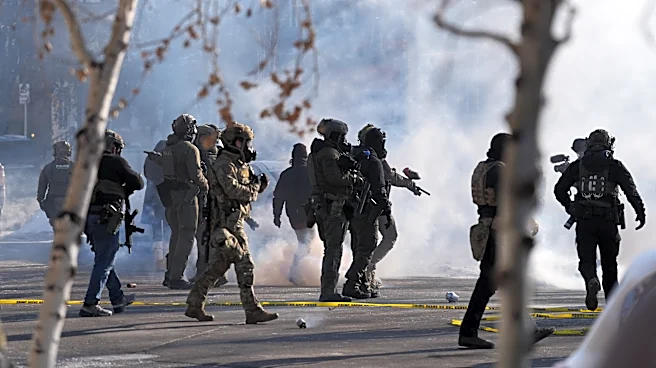
The Trump administration has intensified its efforts against Antifa, a group it designated as a domestic terrorist organization. Recently, the Department of Justice charged 15 individuals linked to Antifa with conspiracy to obstruct lawful immigration
enforcement operations in Minneapolis. This action is part of a broader campaign by the administration to dismantle what it describes as a violent anarchist network. The charges include coordinating violent attacks on ICE agents and facilities, using tactics such as blockades and vehicle tracking. This move follows a series of arrests and convictions of Antifa members across various states, including Oregon, Texas, and California, for similar activities.
Why It's Important?
The Trump administration's actions against Antifa highlight its focus on domestic security and immigration enforcement. By targeting Antifa, the administration aims to curb what it perceives as a significant threat to law enforcement and public safety. This approach has implications for civil liberties and the balance between security and freedom of expression. The administration's stance may influence public opinion and policy regarding protest movements and domestic terrorism. It also underscores the administration's commitment to a hardline approach on immigration and law enforcement, which could impact future legislative and judicial actions.
What's Next?
The legal proceedings against the charged individuals will likely unfold in the coming months, potentially setting precedents for how similar cases are handled in the future. The administration may continue to pursue aggressive measures against groups it deems as threats, which could lead to further legal and political battles. Reactions from civil rights organizations and political opponents are expected, as they may challenge the administration's methods and motivations. The outcome of these cases could influence the administration's strategy and public discourse on domestic terrorism and protest movements.