







What's Happening?
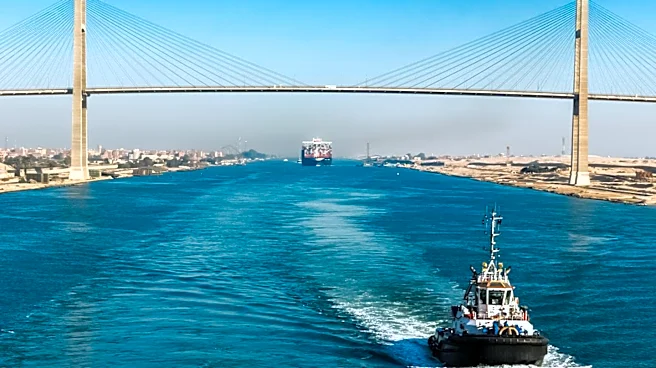
The Red Sea has emerged as a critical geopolitical theater, with its maritime routes, including the Suez Canal and the Bab el-Mandeb Strait, becoming central to global trade networks. International competition for control over ports and military installations
in the region, particularly in the Horn of Africa, is intensifying. Djibouti, for instance, hosts military facilities from multiple major international powers, including the United States, China, France, and Japan. This competition extends to countries like Ethiopia, which seeks expanded maritime access, and Somalia, focused on maritime sovereignty. The interconnected security interests of the Gulf, Horn of Africa, and Mediterranean are creating a complex environment where disruptions in one area can have far-reaching economic consequences globally. Attacks on commercial vessels and rising maritime insecurity have highlighted the vulnerability of this corridor, leading to increased shipping costs, insurance premiums, and potential rerouting of vessels around the Cape of Good Hope, turning regional security crises into global economic burdens.
Why It's Important?
The escalating tensions in the Red Sea and Horn of Africa have significant implications for global supply chains and economic stability, directly impacting U.S. industries and consumers. Disruptions in this vital maritime corridor lead to higher shipping costs and insurance premiums, which can fuel global inflation and undermine efforts by central banks to control prices. The reliance on these routes for international trade means that any instability can affect the flow of goods, energy markets, and overall economic growth. The strategic competition among major powers for influence in the region also raises concerns about potential conflicts that could further destabilize global commerce. For the U.S., this translates to potential increases in import costs, challenges for businesses relying on international trade, and broader economic uncertainty, as the cost of securing these routes becomes a critical factor in international business budgets.
What's Next?
The immediate future will likely see continued efforts by international powers to secure their interests in the Red Sea and Horn of Africa. This may involve increased military presence, diplomatic engagements, and strategic investments in ports and logistics centers. However, the central danger remains that competition could escalate into broader conflicts, drawing smaller states into disputes beyond their capacity to manage. There is an urgent need for a regional framework for maritime security cooperation to combat piracy, smuggling, and protect critical infrastructure, while respecting the sovereignty of bordering countries. Without such a framework, the risk of further disruptions to global trade and economic stability will persist, potentially leading to a re-evaluation of global supply chain strategies by businesses and governments to mitigate risks associated with volatile maritime routes.
Beyond the Headlines
The situation in the Red Sea and Horn of Africa underscores a deeper shift in global economics, moving away from 'cheap globalization' that relied on open and free waterways. The current crisis highlights the vulnerability of 'just-in-time' supply systems and necessitates a transition to more resilient models based on regional diversification and distributed local production. This could lead to a 'redundancy tax' for consumers, as companies build multiple factories and diversify suppliers, and a 'geography tax' due to nearshoring production to stable, geographically closer countries with potentially higher labor costs. Furthermore, there's a growing recognition that 'local community stability' is crucial for the success of geo-economic projects, suggesting that future investments will need to include significant allocations for the development of vulnerable local communities to create 'soft shields' against instability. This paradigm shift implies a future where the cost of security risks is explicitly factored into international business, leading to potentially higher prices for goods but also more resilient and localized supply chains.