
What's Happening?
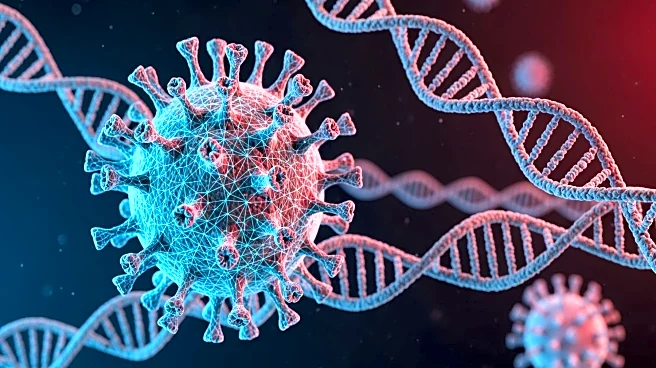
Scientists are raising alarms about the potential for a human pandemic in 2026, driven by the bird flu virus, H5N1. This concern stems from the process of genome reassortment, which has historically been
a catalyst for pandemics. The virus, which has been spreading among wild birds and poultry since 2020, has now infected a wide range of mammals, including dairy cattle in the United States. This unexpected spread increases the risk of the virus evolving to transmit effectively among humans. A study by Indian researchers highlights that once a pandemic strain begins spreading, containment becomes nearly impossible beyond the initial 2 to 10 detected cases.
Why It's Important?
The potential for H5N1 to cause a human pandemic poses significant risks to global health and economic stability. The virus's ability to infect a wide range of species increases the chances of it mutating into a form that could spread easily among humans. This could lead to widespread illness and strain healthcare systems, reminiscent of the COVID-19 pandemic. The economic impact could be severe, affecting industries reliant on poultry and dairy, and leading to increased food prices. The U.S. has already seen significant economic costs due to the virus, with billions spent on compensating farmers and rising grocery prices.
What's Next?
To mitigate the risk of a pandemic, scientists are calling for increased surveillance, transparency, and vaccination efforts, particularly in the United States where the virus is spreading rapidly. Effective vaccines exist, but their deployment has been slow due to trade concerns. The U.S. government is urged to enhance monitoring and reporting to detect early signs of human transmission. The global community must remain vigilant, leveraging lessons from the COVID-19 pandemic to prepare for potential outbreaks.
Beyond the Headlines
The ethical and logistical challenges of deploying vaccines and coordinating international responses are significant. The reluctance to vaccinate poultry due to trade implications highlights the tension between economic interests and public health. Additionally, the virus's spread among wildlife raises concerns about biodiversity and ecosystem impacts. The situation underscores the need for a coordinated global response to emerging infectious diseases.