





What's Happening?
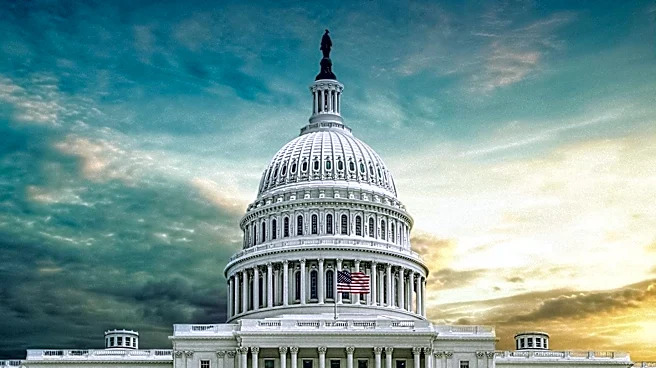
The U.S. Senate has passed a comprehensive sanctions bill targeting Russia, a measure strongly supported by the late Senator Lindsey Graham. The legislation, known as the 'Lindsey O. Graham Sanctioning Russia and Iran Act of 2026,' aims to increase economic
pressure on Russia due to its ongoing conflict with Ukraine. The bill, which passed with an 86-11 vote, includes provisions for imposing tariffs on countries heavily reliant on Russian oil and gas, such as China and India. The bill also extends sanctions to Iran, aligning with President Trump's foreign policy objectives. Despite the Senate's approval, the bill faces skepticism in the House of Representatives, where concerns have been raised about the broad tariff powers it grants to President Trump. Critics argue these powers could lead to increased costs for U.S. consumers and potential political backlash.
Why It's Important?
The passage of this sanctions bill is significant as it represents a strategic effort by the U.S. to curb Russian economic influence and support Ukraine amidst its conflict with Russia. By targeting countries that import Russian energy, the bill seeks to reduce Russia's revenue streams that fund its military activities. However, the broad tariff powers granted to President Trump have sparked debate, with some lawmakers fearing potential economic repercussions for American consumers. The bill's success in the House will be crucial, as it could either bolster or hinder U.S. foreign policy efforts in the region. The outcome will also reflect the current political dynamics in Congress, where Republicans hold a slim majority.
What's Next?
The bill now moves to the House of Representatives, where it will be debated and voted on. If passed, it will be sent to President Trump for approval. The House's decision will be closely watched, as it will determine the future of U.S. sanctions policy towards Russia and Iran. Lawmakers and industries are expected to lobby for amendments to address concerns over the tariff powers. The outcome could influence U.S. relations with countries affected by the tariffs and impact global energy markets.