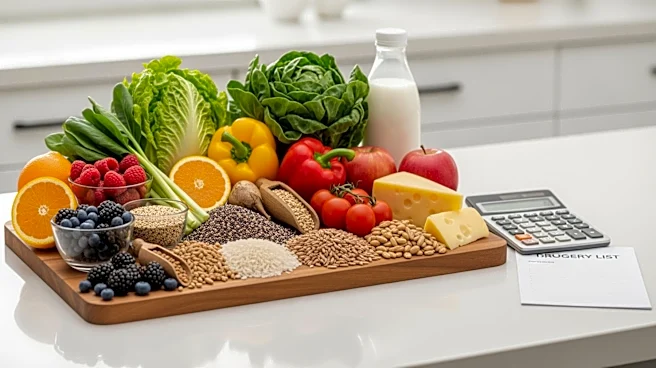

What's Happening?
The USDA has updated its dietary guidelines, recommending that proteins, dairies, healthy fats, and fruits and vegetables constitute the largest portion of a diet. This change, announced in January, has significant
financial implications for consumers. According to research by Numerator, adhering to these new guidelines could increase grocery bills by $1,012 per year, representing a 32% rise. This comes at a time when food costs, particularly for proteins like beef, are already high. The shift towards healthier eating is intended to improve public health, but it poses a financial challenge for many households. Awareness of these new guidelines is low, with only 40% of surveyed individuals aware of the changes. Despite the cost, some consumers are already shifting their shopping habits towards fresh produce, as evidenced by increased visits to grocery store perimeters.
Why It's Important?
The financial impact of the USDA's new food pyramid is significant, especially for consumers already facing high grocery prices. The guidelines aim to promote healthier eating habits, but the associated costs could be prohibitive for many. This situation highlights the tension between public health initiatives and economic realities. The increased cost may deter some consumers from adopting the guidelines, potentially undermining the USDA's health objectives. Additionally, the shift in consumer behavior towards fresh produce could influence grocery store sales patterns, affecting both retailers and suppliers. The guidelines also raise questions about accessibility and affordability of healthy food options, which are crucial for achieving widespread dietary improvements.