





What's Happening?
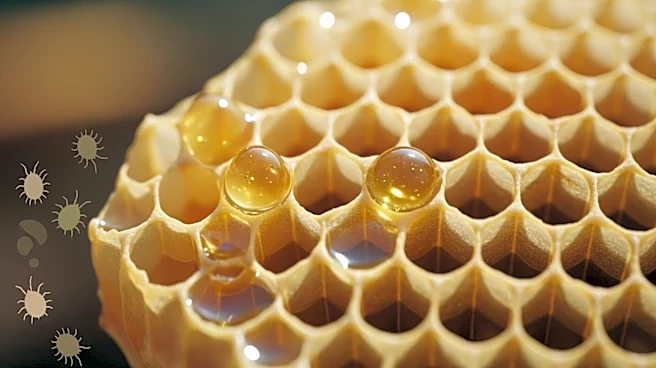
Researchers at the University of California–Riverside have discovered a unique hybrid honeybee population in Southern California that shows natural resistance to Varroa mites, a deadly parasite affecting honeybee colonies across the U.S. The study, published
in Scientific Reports, highlights that these bees, which are a genetically diverse mix from various honeybee lineages, have 68% fewer mites compared to commercial honeybee colonies. This resistance is observed even at the larval stage, suggesting a genetic basis for the trait. The findings offer hope for reducing reliance on chemical treatments, which have been losing effectiveness over time.
Why It's Important?
The discovery of mite-resistant honeybees in Southern California is significant for the agricultural industry, as honeybees play a crucial role in pollinating crops worth billions of dollars. The ability of these bees to fend off Varroa mites naturally could lead to more sustainable beekeeping practices and reduce the economic impact of mite infestations. Understanding the genetic traits that confer this resistance could inform future breeding programs, potentially enhancing honeybee health and productivity nationwide.
What's Next?
Researchers plan to further investigate the genetic, behavioral, and chemical signals that make the Californian honeybee larvae less attractive to Varroa mites. This could lead to the development of new breeding strategies to enhance mite resistance in honeybee populations beyond Southern California. The study's findings may also encourage beekeepers to adopt practices that support the survival and proliferation of these hybrid bees.