







What's Happening?
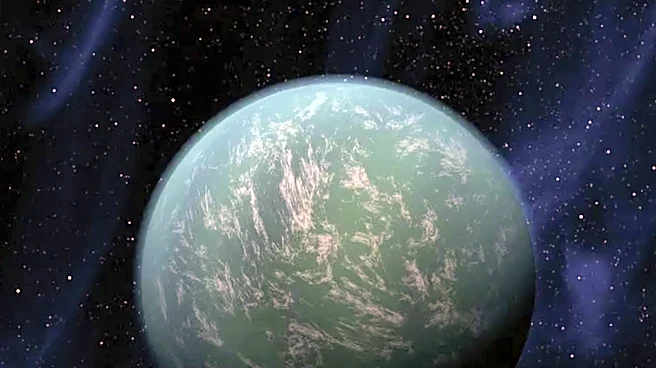
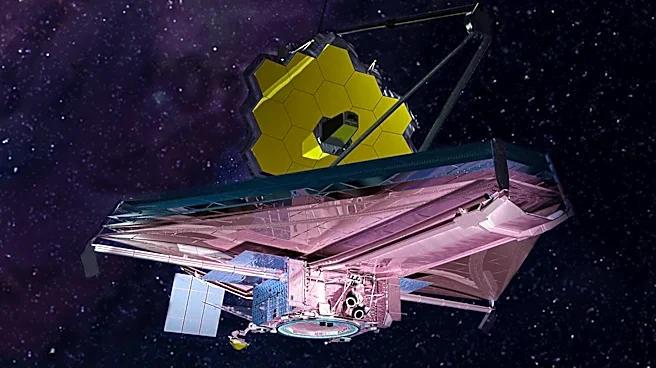
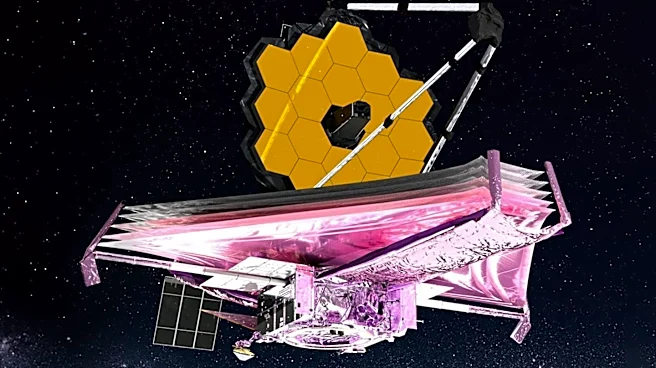
NASA's James Webb Space Telescope has provided new insights into the exoplanet WD 1856 b, a gas giant orbiting a white dwarf star. This planet, discovered in 2020, orbits its star at a distance 50 times closer than Earth orbits the Sun. The Webb Telescope's
observations revealed that WD 1856 b is significantly warmer than expected, suggesting it survived the death of its host star by either being engulfed during the red giant phase or migrating inward due to gravitational interactions. The study offers a glimpse into the potential future of planets in our solar system after the Sun's demise.
Why It's Important?
The findings are crucial for understanding the fate of planets orbiting stars that have exhausted their nuclear fuel. This research provides a model for what might happen to planets like Jupiter after the Sun becomes a white dwarf. It also enhances our understanding of planetary migration and survival in extreme conditions, contributing to the broader field of exoplanetary science and the study of planetary systems' evolution.
What's Next?
Further observations of WD 1856 b are planned to explore its atmospheric chemistry in more detail. These studies will help refine models of planetary survival and migration, offering insights into the dynamics of planetary systems around white dwarfs. The research could also inform future studies of other exoplanets in similar environments, expanding our understanding of planetary resilience and adaptation.