





What's Happening?
The Vanderbilt Costume Ball, held on March 26, 1883, at the Petit Château on Fifth Avenue, was a pivotal event that significantly altered New York's high society. Hosted by Alva Vanderbilt, wife of William Kissam Vanderbilt, the ball cost an estimated
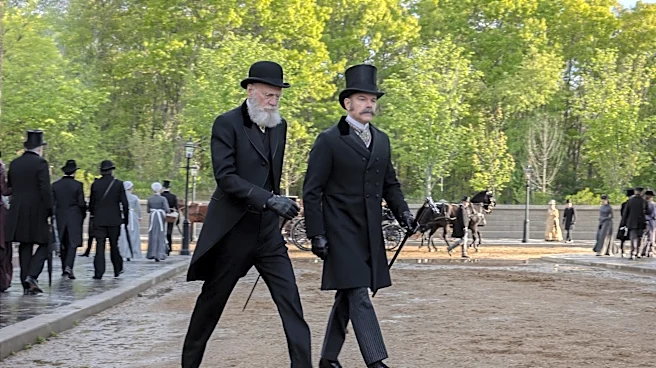
$250,000 (approximately $7.3 million today) and was designed to assert the Vanderbilt family's status among the city's elite. Despite Cornelius Vanderbilt's immense wealth, his family was initially excluded from the 'List of 400'—a roster of high society members compiled by Caroline Astor and Ward McAllister. Alva strategically used the ball, including inviting the press and initially withholding an invitation from Carrie Astor, to force the 'old money' families to acknowledge the Vanderbilts. The lavish event, featuring elaborate costumes and themed quadrilles, was a resounding success, drawing public attention and ultimately breaking down barriers between established aristocracy and the 'nouveau riche.' This groundbreaking event directly inspired Bertha Russell's party in the finale of 'The Gilded Age' season 1.
Why It's Important?
The 1883 Vanderbilt Costume Ball holds significant importance in American social history as it marked a definitive shift in New York's social hierarchy. It demonstrated the growing power and influence of 'new money' families, who had amassed fortunes through industries like railroads, challenging the long-standing dominance of inherited wealth. This event symbolized a broader cultural and economic transformation in the U.S., where industrialization was creating new avenues for wealth and social mobility. The ball's success underscored that wealth, even newly acquired, could command social acceptance and reshape traditional power structures. This shift had lasting implications for American society, fostering a more fluid, albeit still stratified, social landscape. The event's influence on 'The Gilded Age' series highlights its enduring cultural resonance, providing a historical lens through which to understand the dynamics of class, ambition, and social acceptance in the U.S.
What's Next?
The legacy of the Vanderbilt Costume Ball continues to be explored and reinterpreted in popular culture, notably through HBO's 'The Gilded Age.' The series' ongoing seasons will likely continue to draw inspiration from such historical events, offering viewers insights into the social machinations and cultural shifts of the late 19th century. The historical precedent set by the ball—where strategic displays of wealth and social maneuvering could redefine elite circles—remains a relevant theme in contemporary discussions about social influence and status. Future historical dramas and analyses of American society may continue to reference this event as a key moment when the lines between 'old' and 'new' money began to blur, reflecting an ongoing evolution in how wealth and power are perceived and wielded in the U.S.
Beyond the Headlines
Beyond its immediate impact on New York society, the Vanderbilt Costume Ball offers a deeper commentary on the nature of social capital and the performance of status in American culture. Alva Vanderbilt's meticulous planning and strategic use of media and social pressure reveal the intricate, often ruthless, mechanisms by which social hierarchies are maintained and challenged. The ball was not merely a party; it was a calculated assertion of power, demonstrating that wealth could be leveraged to force social recognition. This event also highlights the role of spectacle and public display in shaping perceptions of elite status, a phenomenon that continues in various forms today. The story of the ball underscores the ethical dimensions of social exclusion and the lengths to which individuals will go to achieve acceptance, reflecting a persistent human desire for belonging and recognition within established social frameworks, even if those frameworks are inherently exclusive.