






What's Happening?
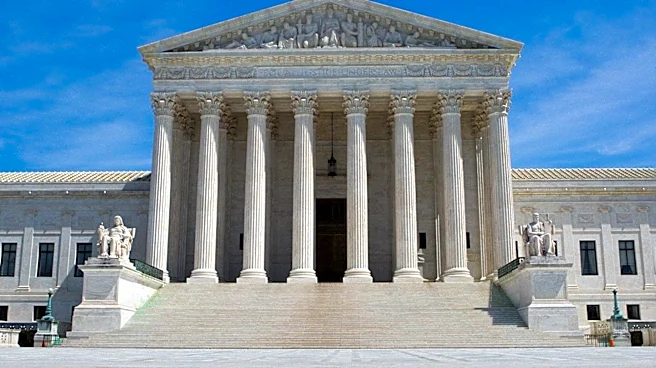
The U.S. Supreme Court has declined to hear an appeal in *Trump v. Thakur*, a decision that effectively maintains legal protections for university research grants against viewpoint-based cancellation. This ruling leaves in place preliminary injunctions
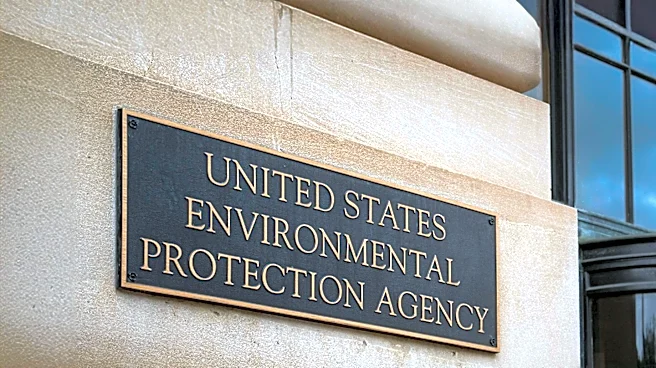
that prevent the administration from unilaterally terminating federal research grants based on automated keyword searches related to administration policy priorities. The Department of Justice had sought to defend the executive branch's authority to cancel federal research funding from agencies like the National Science Foundation (NSF), the National Endowment for the Humanities (NEH), and the Environmental Protection Agency (EPA). The underlying litigation was initiated by a class of University of California (UC) researchers, led by Dr. Neeta Thakur, who challenged the administration’s use of keyword scanning (e.g., 'diversity,' 'climate change') to terminate hundreds of millions of dollars in previously awarded grants. Lower federal courts, including the U.S. Court of Appeals for the Ninth Circuit, had previously granted injunctions, citing unconstitutional infringement on First Amendment rights.
Why It's Important?
This Supreme Court decision provides immediate relief and a vital legal safeguard for principal investigators and research institutions across the U.S. It reinforces the principle that federal research funding should be determined by academic excellence and merit-based peer review rather than political directives or viewpoint-based scrutiny. The ruling ensures that researchers can continue projects that may have been threatened by previous administrative actions, fostering greater stability and predictability in the academic research landscape. For universities, it means that existing federal grant protections remain enforceable, allowing them to operate with greater assurance regarding the security of their funding. The decision also signals a judicial stance against executive overreach in academic funding, upholding academic freedom and the integrity of scientific inquiry, which are crucial for national innovation and progress.
What's Next?
The case will now proceed in the federal district court, as the Supreme Court's denial of the appeal is procedural and not a final ruling on the merits. However, this decision sends a strong signal regarding the current legal stance on grant protections, indicating that lower court injunctions against viewpoint-based cancellations will remain in effect. Research institutions are advised to continue treating existing federal grant protections as enforceable and to maintain rigorous documentation of their grant award procedures and communications with federal agencies. This will help defend against potential future administrative challenges, even as the broader litigation continues. The outcome of the district court proceedings will ultimately determine the long-term legal framework for federal research grant security.
Beyond the Headlines
This ruling touches upon fundamental issues of academic freedom and the separation of powers, particularly concerning the executive branch's influence over federally funded research. The use of automated keyword scanning to identify and terminate grants raises concerns about censorship and the potential chilling effect on research into politically sensitive topics. By upholding the injunctions, the Supreme Court has implicitly affirmed the importance of protecting intellectual inquiry from political interference, reinforcing the idea that scientific and humanistic research should be driven by scholarly merit rather than ideological alignment. This could set a precedent for future administrations, limiting their ability to unilaterally defund projects based on content, thereby safeguarding the independence of the academic research community and promoting a more robust intellectual environment.