



What's Happening?
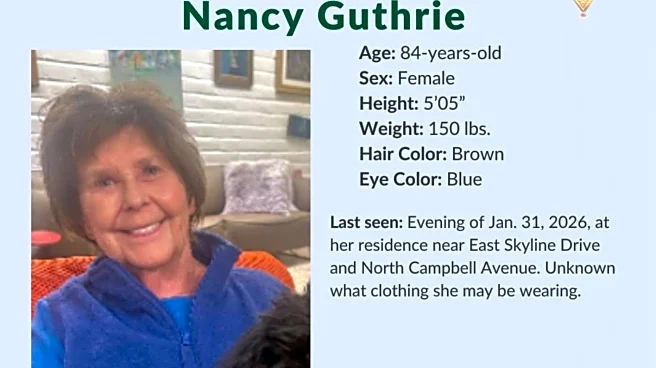
Derrick Callella, a Southern California resident, appeared in court accused of sending a hoax ransom letter to the family of Nancy Guthrie, who is believed to have been abducted. Callella allegedly demanded Bitcoin from the family, using a fake phone
number to send text messages. He was arrested by the FBI and charged with transmitting a ransom demand and using telecommunications to harass. The investigation continues as authorities examine a new message sent to a Tucson news station, with no suspects identified in Guthrie's disappearance.
Why It's Important?
This case highlights the intersection of crime and technology, illustrating how digital tools can be misused for criminal activities. It raises questions about the effectiveness of current legal frameworks in addressing cyber-related crimes and the need for enhanced digital literacy among law enforcement. The incident also emphasizes the emotional and psychological impact on victims' families, who are often left in distress and uncertainty. The broader implications for public safety and the potential for similar crimes in the future are significant.
What's Next?
Authorities are expected to continue their investigation into the new message received by the Tucson news station. The court proceedings for Callella will likely focus on the evidence of his involvement in the hoax. Meanwhile, the Guthrie family and law enforcement are appealing for any information that could lead to Nancy Guthrie's safe return. The case may prompt discussions on improving security measures for high-profile individuals and their families.