





What's Happening?
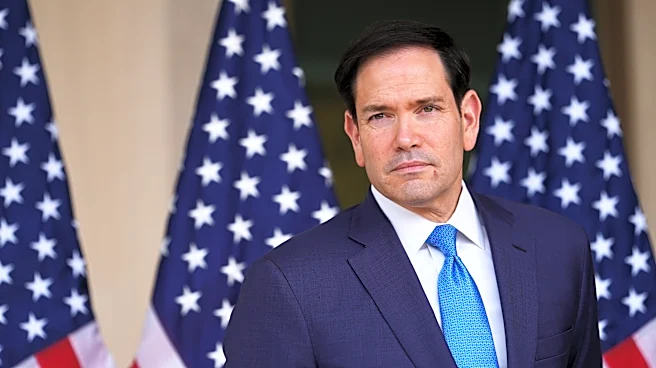
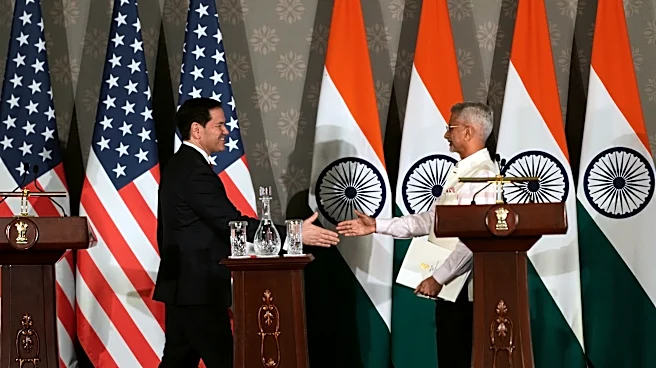
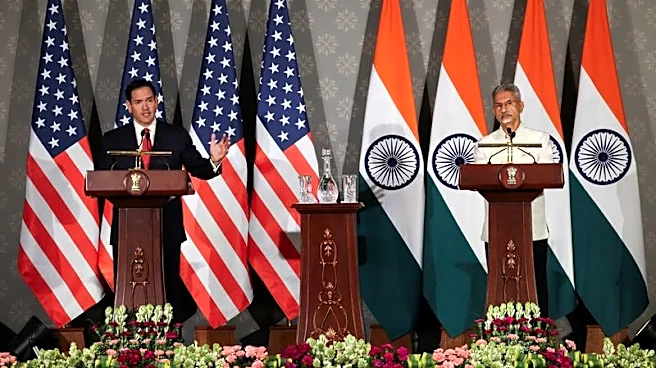
Secretary of State Marco Rubio has embarked on a diplomatic mission to India, engaging in a series of cultural and political events aimed at repairing strained relations between the United States and India. Over four days, Rubio participated in various
activities, including lighting prayer candles with nuns in Kolkata, meeting with India's Prime Minister in New Delhi, and attending cultural performances in Jaipur. This visit comes in response to tensions that have arisen due to President Trump's tariff policies and his administration's perceived favoritism towards Pakistan, which has historically been a point of contention for India. Despite these challenges, Rubio has emphasized the strength of the U.S.-India relationship and the importance of maintaining a strategic partnership, particularly as a counterbalance to China's influence in the region.
Why It's Important?
The diplomatic efforts by Secretary Rubio are crucial in addressing the recent downturn in U.S.-India relations, which have been affected by President Trump's trade policies and geopolitical maneuvers. Strengthening ties with India is significant for the U.S. as it seeks to maintain a strategic alliance in the Indo-Pacific region, especially in light of China's growing influence. The visit underscores the importance of cultural diplomacy and personal engagement in international relations, as Rubio's actions aim to reassure Indian leaders and the public of the U.S.'s commitment to a strong bilateral relationship. The outcome of this visit could have implications for trade, security cooperation, and regional stability, impacting both countries' economic and strategic interests.
What's Next?
Following Rubio's visit, the U.S. and India may engage in further diplomatic discussions to address specific trade disputes and enhance cooperation in areas such as defense and technology. The U.S. may also seek to balance its relations with both India and Pakistan, ensuring that its strategic interests in the region are maintained without alienating key partners. Additionally, the visit could lead to increased dialogue on shared concerns about China's regional ambitions, potentially resulting in joint initiatives to promote a free and open Indo-Pacific. The success of these efforts will depend on continued diplomatic engagement and the ability to navigate complex geopolitical dynamics.