
What's Happening?
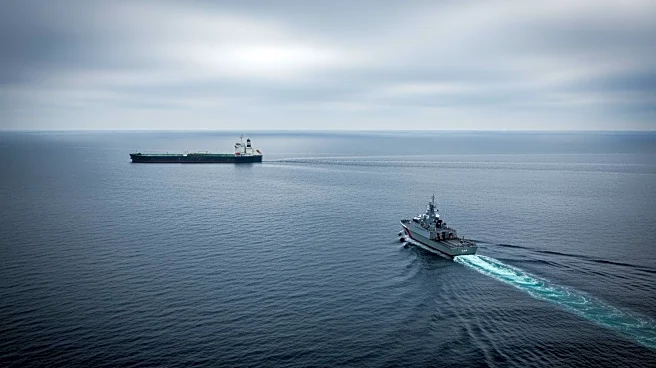
The United States is contemplating deploying additional resources to forcibly board the oil tanker Bella 1, which is currently in international waters near Venezuela. The tanker, described as a 'dark fleet
vessel' by the White House, is under U.S. sanctions and is believed to be sailing under a false flag. The U.S. Coast Guard attempted to interdict the vessel last weekend, but it evaded capture by making a U-turn into the Atlantic Ocean. The pursuit is part of President Trump's strategy to enforce a blockade on Venezuelan oil tankers, aiming to cut off economic support to President Nicolas Maduro. Despite the military buildup in the Caribbean, the U.S. has not yet ordered land strikes in Venezuela. The Bella 1 remains at large, unlike two other tankers, the Skipper and the Centuries, which were successfully intercepted and piloted to Texas.
Why It's Important?
This development underscores the U.S. administration's commitment to enforcing sanctions against Venezuela, aiming to weaken President Maduro's regime by targeting its oil exports. The potential boarding of the Bella 1 highlights the lengths to which the U.S. is willing to go to uphold these sanctions. The situation also reflects broader geopolitical tensions, as the tanker is linked to Iranian oil and proxy groups, indicating a complex international dynamic. The U.S. strategy could have significant implications for global oil markets and international relations, particularly with countries involved in Venezuelan oil trade. The enforcement actions may deter other tankers from entering the region, impacting Venezuela's oil revenue and potentially influencing political stability in the country.
What's Next?
The U.S. may deploy a specialized Maritime Special Response Team to board the Bella 1 if it continues to evade capture. The administration's next steps will likely depend on the tanker's movements and any diplomatic developments. The situation could prompt reactions from Venezuela and its allies, potentially escalating tensions. The U.S. will continue to monitor the region closely, and further military or diplomatic actions may be considered to enforce the sanctions. The outcome of this pursuit could set a precedent for future enforcement of international sanctions by the U.S.