







What's Happening?
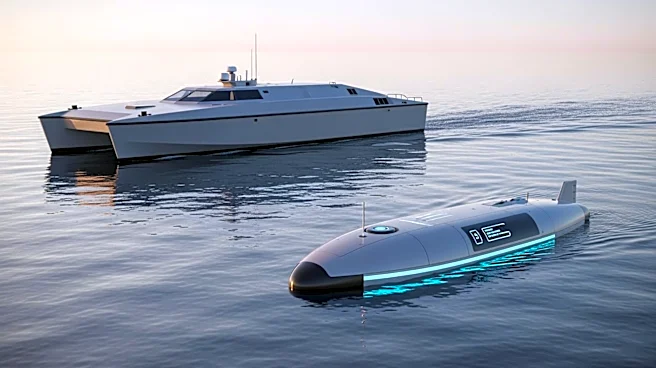
Kraken Robotics has successfully demonstrated the integration of its KATFISH Towed Synthetic Aperture Sonar with an autonomous Launch and Recovery System (LARS) from SEFINE's RD-22 Unmanned Surface Vessel (USV). This demonstration took place in the first
quarter of 2026 off the coast of Istanbul, Turkey, in collaboration with the SEFINE Strategic Unmanned Systems Research Center. The event was attended by several navies and government organizations, focusing on the rapid detection and classification of mine-like objects and critical underwater infrastructure. The KATFISH system provided high-resolution data, which was live-streamed to an onshore command center for real-time classification. Bernard Mills, Executive Vice President of Defence at Kraken Robotics, emphasized the importance of these technologies in safeguarding maritime routes and infrastructure.
Why It's Important?
The successful demonstration of the KATFISH system with SEFINE's USV represents a significant advancement in naval defense capabilities. By enabling the rapid detection and classification of underwater threats, this technology enhances the ability of navies to protect critical maritime infrastructure. The integration of autonomous systems like KATFISH with unmanned vessels allows for more efficient and cost-effective operations, reducing the need for human intervention in potentially dangerous environments. This development is crucial for modern naval operations, as it provides a modular and agile solution to counter mine threats, thereby strengthening maritime security.
What's Next?
Following this successful demonstration, it is likely that Kraken Robotics and SEFINE will continue to refine and expand the capabilities of their autonomous systems. Navies and government organizations may consider adopting these technologies to enhance their maritime defense strategies. Future collaborations could lead to further innovations in unmanned systems, potentially integrating additional sensors and capabilities to address a wider range of underwater threats. The ongoing development of these technologies will be closely watched by defense sectors worldwide, as they seek to improve their operational efficiency and security measures.
Beyond the Headlines
The integration of autonomous systems in naval operations raises important considerations regarding the ethical and legal implications of unmanned warfare. As these technologies become more prevalent, there will be a need to establish clear guidelines and regulations to govern their use. Additionally, the reliance on advanced technology for defense purposes highlights the importance of cybersecurity measures to protect against potential vulnerabilities. The shift towards autonomous systems also reflects a broader trend in military strategy, where technological innovation is increasingly prioritized to maintain a strategic advantage.