







What's Happening?
There is currently no federal income tax credit available for consumers who purchase energy-efficient dishwashers for personal household use in the United States. The federal Energy Efficient Home Improvement Credit, established under IRC §25C and expanded
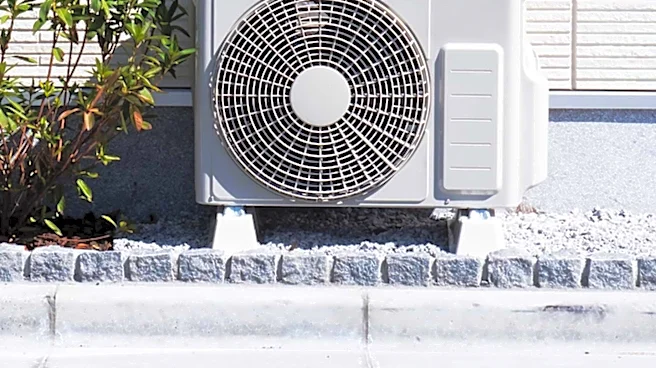
by the Inflation Reduction Act, specifically targets certain types of home improvements rather than individual appliances. Eligible improvements include heat pumps, heat pump water heaters, central air conditioners, furnaces, insulation, air-sealing materials, exterior windows, doors, skylights, and, in limited cases, electrical panel and wiring upgrades. While an ENERGY STAR® label indicates that a dishwasher meets energy-efficiency standards, this certification alone does not qualify it for a federal tax credit. The IRS does not list dishwashers as qualifying property under §25C. However, consumers may still find financial benefits through state or local rebates, or utility programs that offer incentives for ENERGY STAR appliances, such as instant discounts at the point of purchase.
Why It's Important?
This policy distinction is important for U.S. consumers and the appliance industry. For consumers, it clarifies that investing in energy-efficient dishwashers, while beneficial for reducing utility bills and environmental impact, will not yield a federal tax credit. This could influence purchasing decisions, as the immediate financial incentive of a tax credit is absent. For the appliance industry, particularly manufacturers of energy-efficient dishwashers, the lack of federal tax incentives means that market demand is driven more by consumer desire for lower operating costs, environmental consciousness, and state/local programs, rather than a nationwide federal push. This contrasts with the federal government's clear support for broader home energy systems, indicating a strategic focus on larger-scale energy consumption reductions in residential infrastructure rather than individual household appliances. The emphasis on home systems suggests a policy direction aimed at comprehensive energy efficiency upgrades for homes.
What's Next?
Consumers interested in offsetting the cost of energy-efficient dishwashers should explore state, city, or utility-specific rebate programs, as these remain viable avenues for financial incentives. Resources like the Database of State Incentives for Renewables & Efficiency (DSIREUSA.org) can help identify available programs. For businesses, if a dishwasher is used in a commercial setting, it may be eligible for depreciation as business equipment or deductible under IRC §179, subject to specific rules. There is no indication of immediate changes to federal tax credit eligibility for household appliances like dishwashers. Future policy discussions may revisit the scope of federal energy efficiency incentives, but for now, the focus remains on larger home improvement categories.
Beyond the Headlines
The federal government's selective approach to energy efficiency tax credits highlights a broader strategy to incentivize significant, structural changes in residential energy consumption. By focusing on items like heat pumps, insulation, and HVAC systems, the policy aims to tackle major energy drains within a home's infrastructure. This approach implicitly suggests that while energy-efficient appliances are valuable, their individual impact on overall household energy use is considered less substantial than that of core home systems. This could also reflect the administrative complexity of managing tax credits for a vast array of smaller, frequently replaced appliances. The reliance on state and local initiatives for appliance rebates allows for more localized and flexible incentive programs, potentially better tailored to regional energy needs and market conditions.