











What's Happening?
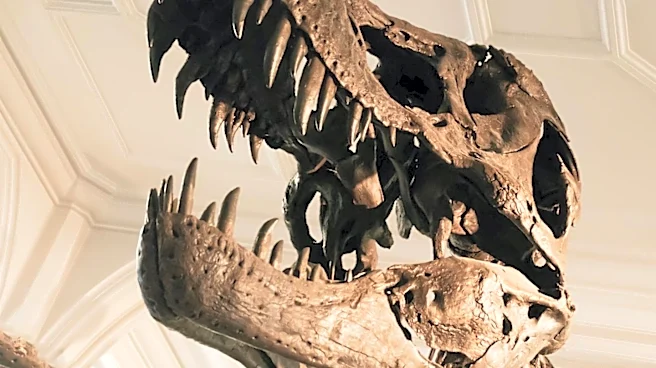
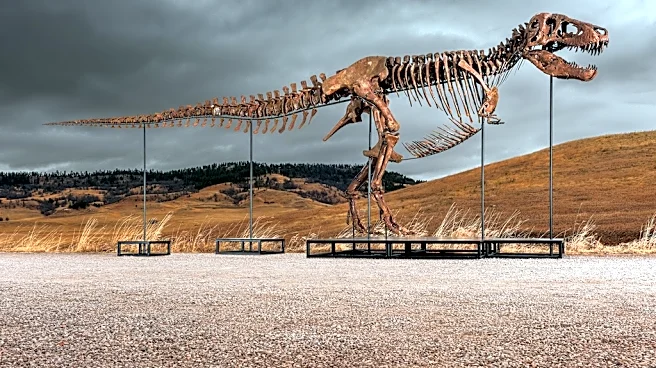
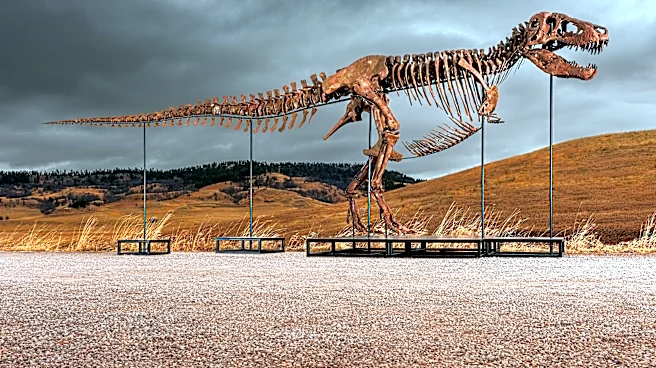
A Tyrannosaurus rex skeleton, nicknamed 'Gus', has set a new record for fossil sales by fetching $50.1 million at a Sotheby’s auction in New York. The fossil, originating from South Dakota, is approximately 67 million years old and was discovered on land
owned by the late Gary 'Gus' Licking. The skeleton is notable for its size, measuring 38 feet in length and 12.5 feet in height, and includes 183 fossil bone elements, making it about 61% complete by bone count. The auction surpassed the previous record held by a Stegosaurus fossil sold for $44.6 million. The sale of Gus has sparked debate within the scientific community, as fossils in private collections are often inaccessible for research, potentially hindering scientific progress.
Why It's Important?
The sale of Gus highlights the ongoing tension between private collectors and the scientific community regarding access to significant paleontological finds. When fossils are sold to private buyers, they often become unavailable for scientific study, which can impede research and the verification of scientific findings. This is particularly concerning for paleontologists who rely on access to such specimens to advance their understanding of prehistoric life. The high price tag also underscores the growing market for rare fossils, which can drive up prices and make it difficult for public institutions to compete in acquiring these important scientific resources.
What's Next?
The identity of the buyer remains unknown, and their intentions for the fossil are unclear. If the buyer chooses to keep Gus in a private collection, it may remain inaccessible to researchers. However, there is potential for the fossil to be loaned to museums or used to create casts for educational purposes, which could mitigate some concerns about its scientific inaccessibility. The sale may also prompt discussions within the scientific community and among policymakers about the need for regulations to ensure that significant fossils remain available for research and public education.
Beyond the Headlines
The sale of Gus raises ethical questions about the commercialization of natural history and the role of private collectors in preserving or restricting access to important scientific artifacts. It also highlights the need for a balance between private ownership and public access to ensure that significant discoveries contribute to the collective understanding of our planet's history. The fossil's journey from discovery to auction also reflects broader trends in the commodification of natural history, where financial value can sometimes overshadow scientific importance.