





What's Happening?
The city of Manaus, the largest urban center in the Brazilian Amazon, has been significantly impacted by smoke from widespread wildfires, leading to the closure of public schools. On Friday, schools were shut down to safeguard the health and well-being
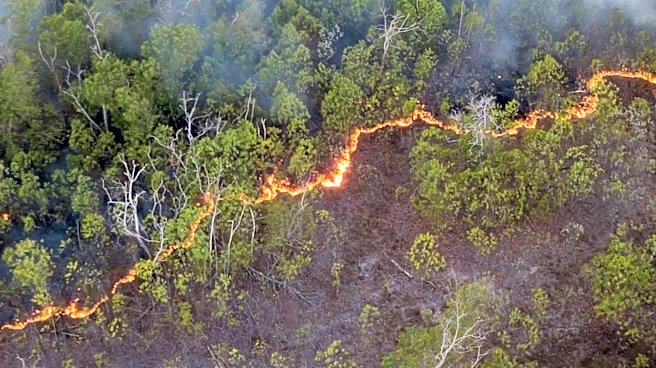
of students and staff. This situation is occurring amidst an intensifying El Niño event, which is projected to be the strongest on record, peaking in December. Brazil is currently experiencing extreme weather patterns, with warnings of increased rainfall and floods in the south, and severe drought and wildfires in the northern regions. The state of Amazonas alone recorded over 3,700 fire hotspots in September, nearly four times the number from the previous year, according to satellite data from Brazil's National Institute for Space Research (INPE). On a single day, Wednesday, more than 749 fires were active, resulting in poor air quality in Manaus, a city home to 2.3 million people. Residents have reported significant breathing difficulties due to the smoke and high temperatures, which reached 40°C (104°F) on Thursday. The city had previously experienced several days of smoke-filled skies last month.
Why It's Important?
The widespread wildfires and the resulting smoke in Manaus highlight the severe environmental and public health consequences of climate change and natural climate variations like El Niño. The Amazon rainforest, being the world's largest tropical rainforest, plays a critical role in global carbon storage and the fight against global warming. The increased frequency and intensity of these fires threaten this vital ecosystem, potentially releasing vast amounts of stored carbon and exacerbating climate change. For the local population, the poor air quality poses significant health risks, particularly respiratory problems, leading to disruptions in daily life, such as school closures. This situation also underscores the vulnerability of large urban centers located near critical natural environments to climate-related disasters. The economic impact includes potential healthcare burdens and disruptions to local commerce and education. The event serves as a stark reminder of the interconnectedness of global climate patterns and local environmental health, with far-reaching implications for biodiversity, climate regulation, and human well-being.
What's Next?
Authorities in Manaus have not yet set a date for schools to reopen, indicating that the situation remains fluid and dependent on improvements in air quality. The intensifying El Niño event is expected to peak in December, suggesting that the region may continue to experience severe drought conditions and a heightened risk of wildfires in the coming months. This necessitates ongoing monitoring by agencies like INPE and continued efforts by firefighters to control the blazes. Public health officials will likely continue to advise residents to avoid outdoor activities and take precautions against poor air quality. The long-term implications include the need for more robust climate adaptation strategies and disaster preparedness plans for cities in the Amazon region. International attention may also increase, potentially leading to calls for greater conservation efforts and support for Brazil in managing these environmental challenges. The event could also prompt further research into the specific impacts of strong El Niño events on the Amazon and its communities.
Beyond the Headlines
The crisis in Manaus extends beyond immediate public health and environmental concerns, touching upon deeper socio-economic and governance issues. The recurring nature of these wildfires, exacerbated by climate phenomena, points to systemic vulnerabilities in environmental management and protection within the Amazon. The displacement of communities, loss of livelihoods, and potential long-term health effects from prolonged exposure to smoke could lead to significant social instability. Furthermore, the destruction of the rainforest impacts indigenous communities who rely on the ecosystem for their survival and cultural heritage. The event also highlights the global responsibility in addressing climate change, as the Amazon's health has worldwide implications for carbon cycles and biodiversity. The challenges faced by Manaus could serve as a case study for other cities globally that are increasingly exposed to climate-induced disasters, emphasizing the urgent need for integrated approaches to urban planning, environmental conservation, and public health policy in the face of a changing climate.