
What's Happening?
The North Carolina Department of Environmental Quality (NC DEQ) has provided comprehensive information regarding its National Pollutant Discharge Elimination System (NPDES) Wastewater program. This program is responsible
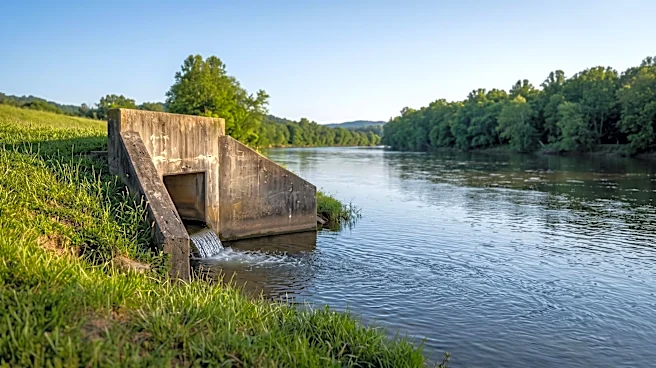
for regulating all wastewater discharges into surface waters within North Carolina to control water pollution. The Clean Water Act of 1972 established strict controls, with enforcement delegated to the Environmental Protection Agency (EPA), which then created the NPDES to track and control point sources of pollution. North Carolina received permitting authority from the EPA in 1975. The primary method of control involves issuing permits to dischargers, setting limitations on wastewater flow and constituents. The NPDES program at the Division of Water Resources manages the issuance of these permits, determining the quality and quantity of treated wastewater a receiving stream can assimilate, and collaborating with regional offices. The program also establishes limits for various pollutants and enforces discharge limitations through its NPDES Compliance program, with penalties for unpermitted discharges reaching up to $25,000 per day.
Why It's Important?
The NC DEQ's NPDES Wastewater program is critically important for protecting North Carolina's water quality and public health. By regulating wastewater discharges, the program prevents pollution of rivers, lakes, and coastal waters, which are vital for ecosystems, recreation, and drinking water sources. The strict permitting process ensures that industrial and municipal dischargers treat their wastewater to acceptable standards, minimizing environmental impact. The delegation of authority from the EPA to North Carolina allows for localized management of water resources, enabling the state to address specific regional environmental concerns more effectively. The significant penalties for non-compliance underscore the seriousness of water pollution and provide a strong deterrent against illegal discharges, safeguarding the state's natural resources for current and future generations. This regulatory framework is essential for maintaining ecological balance and supporting sustainable economic activities that rely on clean water.
What's Next?
The NC DEQ will continue to administer and enforce the NPDES program, regularly reviewing and updating permit requirements to reflect new scientific understanding and technological advancements in wastewater treatment. The department will likely conduct ongoing monitoring and inspections to ensure permit compliance and address any violations promptly. There may be future public outreach initiatives to educate stakeholders on the importance of water quality and the role of the NPDES program. The NC DEQ will also continue to collaborate with federal agencies like the EPA and other state departments to enhance water resource management strategies. Permittees can expect continued oversight and support in meeting their discharge limitations, with potential for new guidelines or reporting requirements as environmental standards evolve.
Beyond the Headlines
The NPDES program in North Carolina, as detailed by the NC DEQ, highlights the complex interplay between environmental regulation, economic activity, and public welfare. The program's existence is a direct response to historical environmental degradation, demonstrating a societal commitment to protecting natural resources. Beyond the immediate goal of pollution control, the NPDES framework influences industrial practices, encourages innovation in wastewater treatment technologies, and shapes urban planning decisions related to infrastructure development. The balance between allowing necessary discharges and maintaining ecological integrity is a continuous challenge, often involving scientific research, legal interpretations, and public engagement. The program also underscores the principle of environmental justice, ensuring that all communities have access to clean water, regardless of their socioeconomic status, by holding polluters accountable for their impact.