



What's Happening?
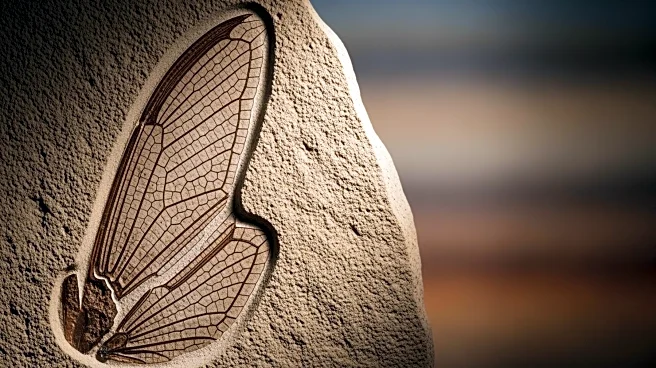
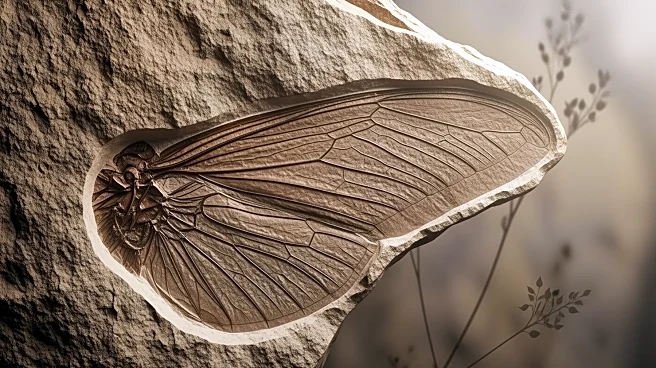
A new study led by researchers from the University of Pretoria and published in Nature challenges the long-held belief that high atmospheric oxygen levels 300 million years ago were responsible for the massive size of ancient insects. The study utilized
high-power electron microscopy to examine the tracheal systems of insects, revealing that the space occupied by tracheoles in flight muscles is minimal, even in large species. This finding suggests that oxygen levels did not limit the size of these insects, contradicting previous theories. The research indicates that other factors, such as predation or biomechanical constraints, may have influenced the size of these ancient creatures.
Why It's Important?
This study provides new insights into the evolutionary biology of insects, challenging established theories about the relationship between atmospheric conditions and biological development. By refuting the oxygen-size theory, the research opens up new avenues for understanding the factors that influenced the evolution of insect size. This could have broader implications for the study of evolutionary biology and paleontology, prompting scientists to reconsider other environmental or ecological factors that may have played a role. The findings also highlight the importance of using advanced technology to revisit and potentially revise scientific theories.