



What's Happening?
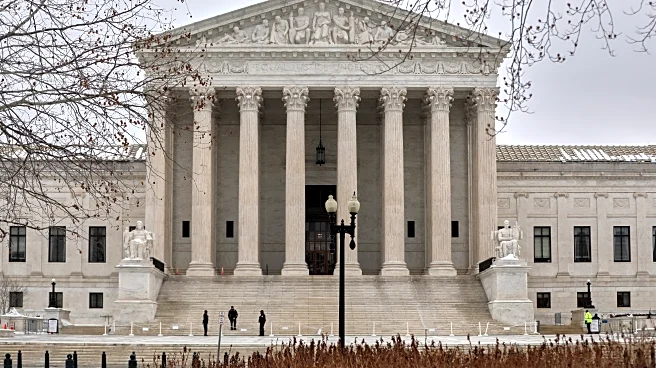
The U.S. Supreme Court has ruled against President Trump's use of a 1970s emergency act to impose tariffs on imports from various countries. Despite this, President Trump announced a new global tariff rate of 10%, which he later increased to 15%, utilizing
a different legal framework from the 1974 Trade Act. This decision has caused concern among European officials, who fear that existing trade agreements with the U.S. could be jeopardized. The European Union is seeking clarity on the implications of these tariffs, as they could affect the legal foundation of a customs agreement reached with the U.S. over the summer.
Why It's Important?
The Supreme Court's decision and President Trump's subsequent actions have significant implications for international trade relations. The imposition of new tariffs could strain U.S. relations with its trading partners, particularly the European Union, which is already expressing concern over the potential impact on existing trade agreements. The uncertainty surrounding these tariffs could lead to economic instability and affect global markets. Additionally, the U.S. national budget faces potential liabilities due to claims for tariffs that have already been paid, estimated at approximately $175 billion.
What's Next?
Chancellor Friedrich Merz plans to discuss the tariff policy with President Trump in Washington, aiming to establish a clear European stance on the matter. The European Union is coordinating internally to address the potential impact of the new tariffs. Meanwhile, the U.S. Congress may need to approve any extension of the tariffs beyond the initial 150-day period allowed under the 1974 Trade Act. The situation remains fluid, with potential legal challenges to the new tariffs and ongoing discussions between the U.S. and its trading partners.