



What's Happening?
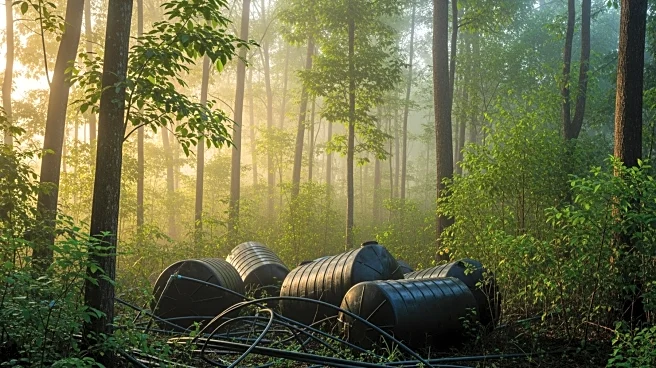
Illegal cannabis farms in California's public lands are causing significant environmental damage, according to ecologists and researchers. These operations, often located in national forests, leave behind hazardous waste, including pesticides and fertilizers,
which contaminate ecosystems and water sources. Despite law enforcement raids, many sites remain uncleaned due to inadequate federal funding and resources. The California Department of Fish and Wildlife, along with other state agencies, is attempting to address the issue through cleanups and policy initiatives. However, the scale of the problem, with thousands of sites identified, presents a daunting challenge.
Why It's Important?
The environmental impact of illegal cannabis cultivation is a pressing concern for California, affecting biodiversity, water quality, and public health. The presence of toxic chemicals in sensitive ecosystems poses a threat to wildlife and can disrupt entire habitats. The situation also highlights the challenges of managing public lands and the need for coordinated efforts between state and federal agencies. As California continues to grapple with the consequences of cannabis legalization, addressing the environmental fallout from illegal grows is crucial for sustainable land management and conservation efforts.
What's Next?
Efforts to clean up and restore affected areas are ongoing, with state agencies leading initiatives to remove hazardous materials and rehabilitate damaged ecosystems. The California Department of Fish and Wildlife is conducting studies to inform a comprehensive cleanup strategy, while also training additional teams to handle hazardous waste. Legislative measures may be introduced to secure more funding and resources for these efforts. The success of these initiatives will depend on continued collaboration between state and federal entities, as well as public support for environmental conservation.