
What's Happening?
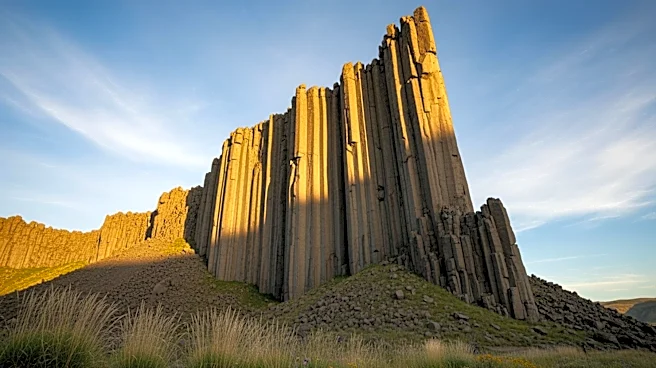
Devils Tower in Wyoming, a geological formation and spiritual site for Native Americans, has gained significant cultural recognition. Designated as the United States' first national monument in 1906, its
prominence was further elevated by its appearance in Steven Spielberg's 1977 film 'Close Encounters of the Third Kind.' The tower, formed by cooling magma, continues to attract tourists and holds a mystical allure. This site is part of a broader trend where natural landmarks gain fame through media exposure, similar to Northern Ireland's 'Kingdom of Mourne,' featured in 'Game of Thrones.'
Why It's Important?
The cultural and historical significance of Devils Tower highlights the intersection of natural heritage and popular culture. Its status as a national monument underscores the importance of preserving such sites for their ecological and cultural value. The increased tourist interest driven by media exposure can boost local economies and promote awareness of indigenous cultural sites. However, it also raises concerns about managing tourist impact on these sensitive environments. The recognition of such landmarks can foster a deeper appreciation for natural history and indigenous cultures.
Beyond the Headlines
The fame of Devils Tower and similar sites raises questions about the commercialization of cultural and natural heritage. While increased tourism can provide economic benefits, it also necessitates careful management to preserve the integrity of these sites. The portrayal of such landmarks in media can influence public perception and understanding of their cultural significance. This trend highlights the need for responsible tourism practices that respect indigenous traditions and environmental sustainability.