




What's Happening?
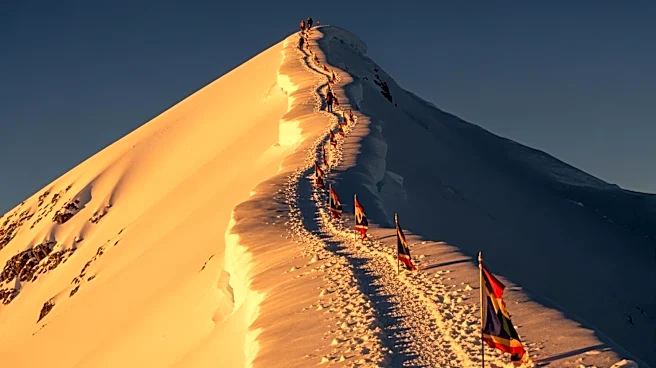
A record 274 climbers reached the summit of Mount Everest from the Nepalese side in a single day, marking the highest number of ascents in one day from this route. The climbers took advantage of clear weather conditions, despite the season starting late
due to the threat of ice fall on the normal tourist route. The ascent was largely facilitated by Sherpa guides, with most climbers using supplementary oxygen. The Ecuadorian climber Marcelo Segovia was notable for summiting independently and without oxygen. The large number of climbers has raised concerns about potential safety risks, such as jams in the 'death zone' where oxygen levels are critically low. This year, Nepal issued 494 permits for Everest climbs, each costing $15,000.
Why It's Important?
The record number of climbers highlights the growing popularity and commercialization of Everest expeditions, which can lead to overcrowding and increased safety risks. The high volume of climbers in a single day can result in dangerous bottlenecks, particularly in the 'death zone', where delays can be life-threatening. The situation underscores the ongoing debate about the regulation of climbing permits and the need for improved safety measures. The economic impact is significant for Nepal, as climbing permits are a major source of revenue, but the potential for accidents could harm the country's reputation as a safe destination for mountaineers.
What's Next?
As the climbing season progresses, authorities will need to monitor the situation closely to prevent overcrowding and ensure climber safety. There may be calls for stricter regulations on the number of permits issued and the management of climber traffic on the mountain. The tourism department will continue to verify the ascents and issue climbing certificates. The outcome of this season could influence future policies on Everest expeditions, balancing economic benefits with safety and environmental concerns.