


What's Happening?
NASA Administrator Jared Isaacman, NASA astronaut Stephen Bowen, and U.S. Rep. Hal Rogers visited Morehead State University to highlight the institution's Space Science Center and its collaborative efforts with NASA. The visit underscored Morehead State's
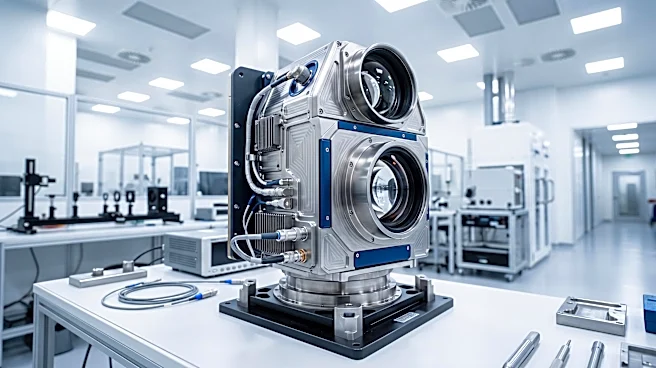
role in preparing the next generation of scientists and engineers for space exploration. During their visit, the officials engaged with faculty, staff, and students before embarking on a guided tour of the Space Science Center. Isaacman emphasized that Morehead State students would have the opportunity to work on hardware destined for the moon within the next few years, providing valuable hands-on experience for future human-rated missions to the moon or Mars. A significant outcome of the visit was the announcement by U.S. Rep. Hal Rogers, who presented $7.5 million in federal funding to support Morehead State’s space science program.
Why It's Important?
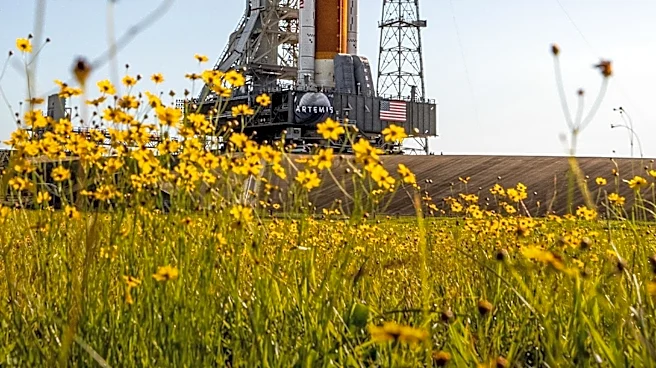
This visit and the substantial federal funding highlight the critical role of academic institutions like Morehead State University in advancing U.S. space exploration goals. The $7.5 million investment will significantly bolster the university's space science program, enabling it to further develop its research capabilities, educational offerings, and infrastructure. This support is crucial for nurturing a skilled workforce that can contribute to NASA's ambitious missions, including the Artemis program aimed at returning humans to the moon and eventually Mars. By providing students with direct involvement in lunar hardware development, NASA is ensuring practical experience and fostering innovation at the collegiate level. This partnership also demonstrates a commitment to regional development and the decentralization of space-related expertise beyond traditional hubs, potentially creating new economic opportunities and inspiring STEM education in Kentucky. The collaboration between government, space agencies, and academia is vital for sustaining long-term scientific and technological leadership in space.
What's Next?
With the new $7.5 million federal funding, Morehead State University's Space Science Center is expected to expand its programs and research initiatives, further integrating students into NASA's lunar exploration efforts. Students will likely continue to engage in hands-on work with hardware destined for the moon, gaining practical experience that prepares them for future careers in the space industry. The ongoing partnership between Morehead State and NASA will likely lead to more collaborative projects and opportunities for students and faculty. This investment could also attract more students to STEM fields, particularly space science and engineering, at Morehead State and other regional institutions. The university will continue to play a role in preparing the next generation of space professionals, contributing to the broader national effort to achieve ambitious space exploration milestones, including future human missions to the moon and Mars.
Beyond the Headlines
The federal investment in Morehead State's space science program reflects a broader strategy to democratize access to space education and research, moving beyond established aerospace centers. This approach can foster innovation by tapping into diverse talent pools and regional strengths, potentially leading to unexpected breakthroughs. The emphasis on students working with 'non-human-rated' hardware for early lunar missions provides a crucial learning curve, allowing for experimentation and risk-taking that might be prohibitive in human-rated projects. This practical, iterative approach to space development can accelerate progress and reduce overall mission costs. Furthermore, the involvement of a U.S. Representative in securing funding underscores the political will and bipartisan support for space exploration, recognizing its long-term benefits for national prestige, economic growth, and scientific advancement. This model of academic partnership could serve as a blueprint for other regions looking to contribute to the national space agenda, creating a more distributed and resilient ecosystem for space innovation.