
What's Happening?
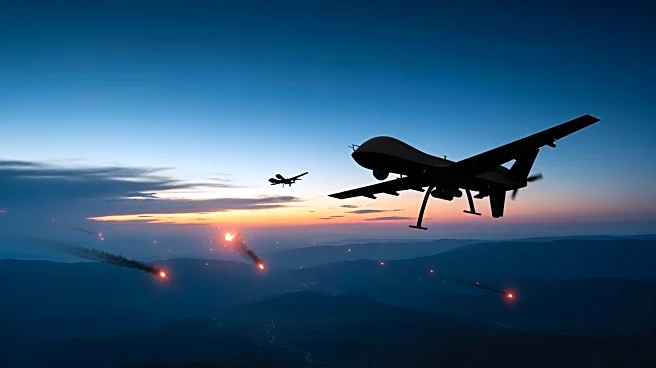
The United States launched surprise airstrikes on ISIS targets in Nigeria on Christmas Day. The strikes were ordered by the president in response to militant activities, specifically accusing the group
of 'slaughtering' Christians in the region. This military action highlights the ongoing U.S. efforts to combat terrorism globally, particularly in areas where extremist groups have been active. The strikes are part of a broader strategy to address the threat posed by ISIS and similar organizations, which have been responsible for numerous attacks and human rights violations in various parts of the world.
Why It's Important?
The airstrikes underscore the U.S. commitment to counterterrorism efforts and the protection of religious minorities. By targeting ISIS in Nigeria, the U.S. aims to disrupt the group's operations and prevent further violence against civilians, particularly Christians who have been targeted in recent attacks. This action also reflects the broader geopolitical strategy of the U.S. to maintain stability in regions affected by terrorism, which can have significant implications for international security and humanitarian conditions. The strikes may also influence U.S. relations with Nigeria and other African nations, as well as the global perception of U.S. military interventions.
What's Next?
Following the airstrikes, there may be increased diplomatic and military engagements between the U.S. and Nigeria to address the ongoing threat of ISIS and other extremist groups. The U.S. is also expected to continue its support for peace talks and humanitarian efforts in regions affected by terrorism. Additionally, President Trump is scheduled to host Ukrainian President Zelenskyy for peace talks, indicating a continued focus on international diplomacy and conflict resolution. The outcomes of these engagements could shape future U.S. foreign policy and military strategies in Africa and beyond.