




What's Happening?
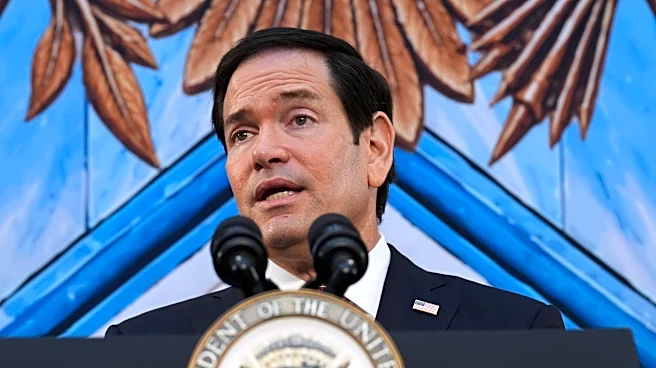
On August 24, 2026, United States Secretary of State Marco Rubio formally removed Syria from its designation as a State Sponsor of Terrorism (SST). This action follows a series of steps taken by the U.S. to foster trade relations with Syria, including
the repeal of six executive orders on June 30, 2025, and the Caesar Act on December 18, 2025. Historically, SST designation has imposed severe economic restrictions, such as limiting U.S. economic aid, banning military sales and exports, creating additional hurdles for dual-use goods, and establishing significant banking barriers. The rescission aims to ease trade and related activities between the U.S. and Syria, signaling a shift in diplomatic and economic policy towards the nation.
Why It's Important?
The removal of Syria from the SST list is a significant policy shift that could have substantial implications for U.S. businesses and international trade. The previous designation created a restrictive environment, deterring U.S. companies from engaging in commerce with Syria due to the risk of sanctions. This change potentially opens up new avenues for trade and investment, particularly in sectors that were previously heavily restricted. While the move aims to normalize economic relations, it also presents a complex landscape for businesses, as other sanctions related to designated individuals, terrorist organizations, and dealings involving Russia and Iran remain in effect. This necessitates continued high levels of due diligence for any U.S. entity considering engagement with Syrian counterparties or cargoes.
What's Next?
Despite the removal from the SST list, U.S. entities engaging with Syria will still need to navigate a complex web of remaining sanctions. The U.S. government will likely continue to monitor activities to ensure compliance with these ongoing restrictions. Businesses are expected to maintain rigorous due diligence practices to avoid inadvertently violating sanctions related to specific individuals, entities, or transactions involving other sanctioned nations. The European Union and the United Kingdom have also eased some sanctions against Syria, but various measures persist, including those against individuals and entities linked to the former Assad regime, and restrictions on arms and goods usable for internal repression. This fragmented sanctions landscape means that a full normalization of trade will be a gradual process, requiring careful navigation by all stakeholders.
Beyond the Headlines
The U.S. decision to remove Syria from the SST list reflects a broader strategic re-evaluation of its foreign policy in the Middle East. This move could be interpreted as an attempt to foster stability and potentially counter the influence of other regional actors by encouraging economic engagement. However, the continued presence of other sanctions indicates a nuanced approach, balancing the desire for economic normalization with ongoing concerns about human rights and regional security. The ethical implications for U.S. businesses entering the Syrian market will be significant, requiring careful consideration of supply chains and partnerships to avoid inadvertently supporting entities or individuals still subject to sanctions. This policy shift could also signal a potential recalibration of U.S. engagement with other nations currently on the SST list in the future.