



What's Happening?
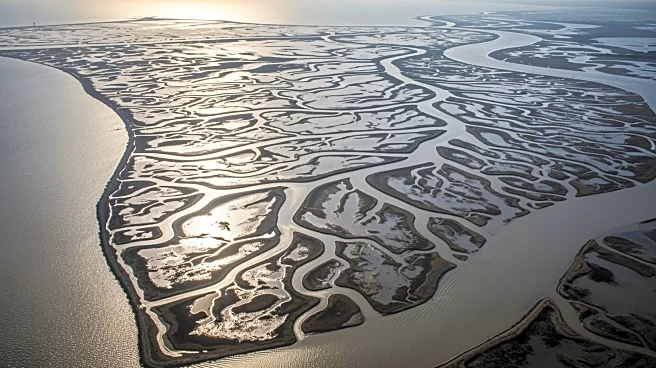
A recent study conducted by Manoochehr Shirzaei at Virginia Tech and his colleagues has highlighted the alarming rate at which river deltas around the world are sinking. The research, which utilized satellite data from the European Space Agency’s Sentinel
1, examined 40 river deltas, including the Mississippi, Mekong, and Nile. The findings indicate that subsidence, primarily driven by excessive groundwater extraction, urban expansion, and sediment alteration, poses a greater threat to these regions than sea-level rise. In many deltas, the rate of land sinking exceeds the rate of sea-level rise, with the Chao Phraya delta in Thailand experiencing the most severe subsidence. This phenomenon is compounded by global sea levels rising at approximately 4 millimeters per year, leading to increased flooding risks for millions living in these areas.
Why It's Important?
The sinking of river deltas has significant implications for the communities residing in these regions, many of which are economically and environmentally crucial. With up to half a billion people living on these deltas, including ten megacities, the threat of flooding is a pressing concern. The study suggests that human-driven subsidence can be locally addressed through measures such as groundwater regulation and sediment management, unlike global sea-level rise. This highlights the need for policymakers to focus on subsidence as a critical factor in adaptation efforts. The findings also underscore the potential impact of water-intensive facilities, such as data centers, which could exacerbate subsidence if they rely on local water supplies.
What's Next?
The study calls for a reevaluation of current adaptation strategies, emphasizing the importance of addressing human-driven subsidence alongside sea-level rise. Policymakers are encouraged to implement groundwater regulation and sediment management practices to mitigate the risks associated with sinking deltas. Additionally, industries and facilities located in these regions, particularly those with high water demands, are urged to minimize their impact on local water resources. This proactive approach could help preserve critical infrastructure and protect vulnerable communities from the increasing threat of flooding.
Beyond the Headlines
The research highlights the complex interplay between human activities and environmental changes, suggesting that subsidence is a locally addressable issue. This presents an opportunity for targeted interventions that could significantly reduce flooding risks. Furthermore, the study raises ethical considerations regarding the placement of water-intensive facilities in vulnerable regions, urging a balance between economic development and environmental sustainability. The long-term implications of these findings could lead to shifts in urban planning and infrastructure development, prioritizing resilience and adaptation in the face of environmental challenges.