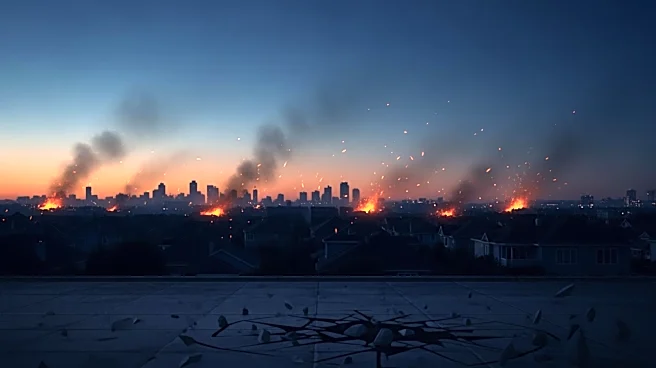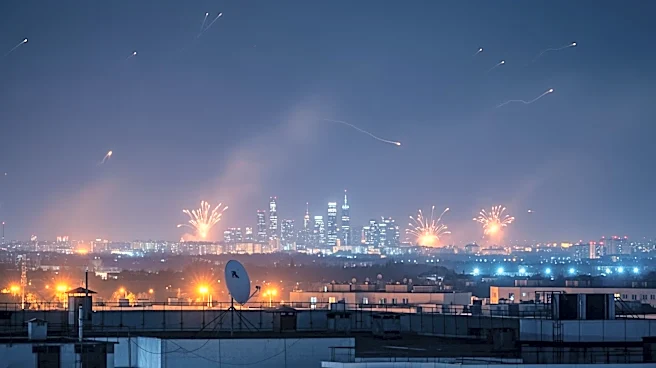








What's Happening?
In response to a missile attack from Iran, Israel's Home Front Command has imposed nationwide emergency measures. These include the closure of all schools and restrictions on workplaces, which can only operate if employees have access to protected spaces
during alerts. Public gatherings are limited to 200 people outdoors and 500 indoors, provided there is access to a protected space. The Home Front Command has outlined a three-stage alert system, including early warnings and siren alerts. Citizens are advised to maintain clear paths to protected spaces and prepare emergency equipment. The measures aim to ensure public safety amid heightened tensions following the missile attack.
Why It's Important?
The implementation of these emergency measures highlights the ongoing security challenges faced by Israel due to regional tensions, particularly with Iran. The restrictions on schools and workplaces reflect the severity of the threat and the need for preparedness in the face of potential further attacks. This situation underscores the broader geopolitical instability in the Middle East, with implications for regional security and international diplomatic efforts. The measures also demonstrate Israel's proactive approach to civilian protection and crisis management, which could influence public policy and emergency response strategies in other countries facing similar threats.
What's Next?
The continuation of these emergency measures will depend on the evolving security situation and any further military actions by Iran. Israel may engage in diplomatic efforts to de-escalate tensions, while also preparing for potential retaliatory measures. The international community may respond with calls for restraint and dialogue to prevent further escalation. The situation could lead to increased military readiness and potential adjustments in Israel's defense strategies. Monitoring the effectiveness of the emergency measures will be crucial in ensuring public safety and maintaining stability.