


What's Happening?
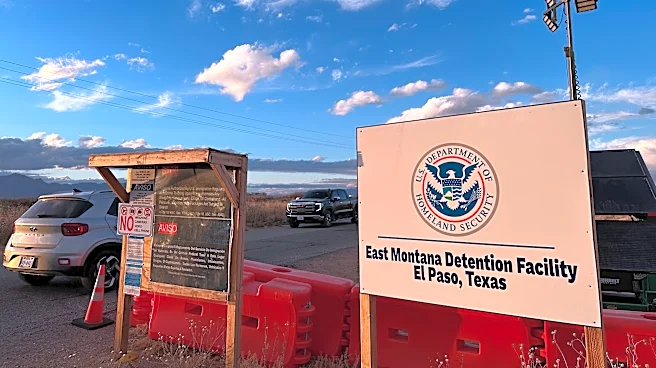
The ICE detention facility at Camp East Montana, located in west Texas, has come under scrutiny for its harsh conditions and environmental impact. Reports indicate that detainees face poor living conditions, including exposure to dust, inadequate medical
care, and insufficient nutrition. The camp, which is the largest immigration-related detention facility in the U.S., operates with a capacity of 5,000 detainees. It relies heavily on generators, contributing to noise and air pollution. The Department of Homeland Security (DHS) has denied allegations of mistreatment, asserting that detainees receive comprehensive medical care and nutritious meals. However, advocates and detainees report otherwise, describing the conditions as akin to 'psychological torture.' The camp's reliance on temporary tent structures instead of permanent buildings has raised concerns about its environmental footprint, particularly in terms of energy consumption and emissions.
Why It's Important?
The situation at Camp East Montana highlights significant human rights and environmental issues. The alleged mistreatment of detainees raises ethical concerns about the U.S. immigration detention system under the Trump administration. The environmental impact of the camp, particularly its reliance on generators, contributes to local pollution and broader climate change concerns. This situation underscores the tension between immigration enforcement and humanitarian standards, as well as the environmental responsibilities of government facilities. The ongoing criticism could influence public opinion and policy discussions regarding immigration detention practices and environmental stewardship.
What's Next?
Advocates and legal experts are likely to continue pressing for improvements in the conditions at Camp East Montana. There may be calls for increased oversight and accountability from the DHS and ICE. The environmental impact of the facility could prompt discussions about the sustainability of such detention centers and the need for more permanent, environmentally friendly infrastructure. Additionally, the broader implications for U.S. immigration policy and its alignment with human rights standards may be debated in political and public forums.