







What's Happening?
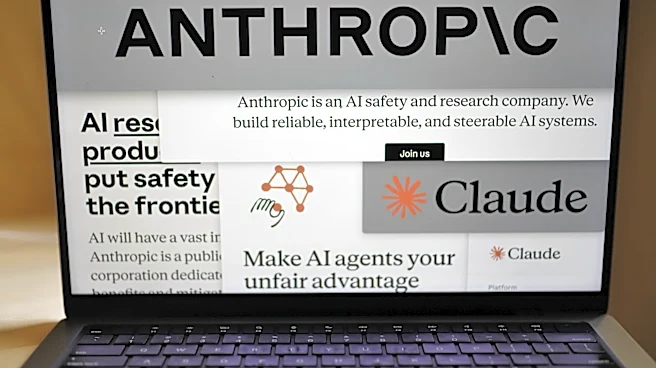
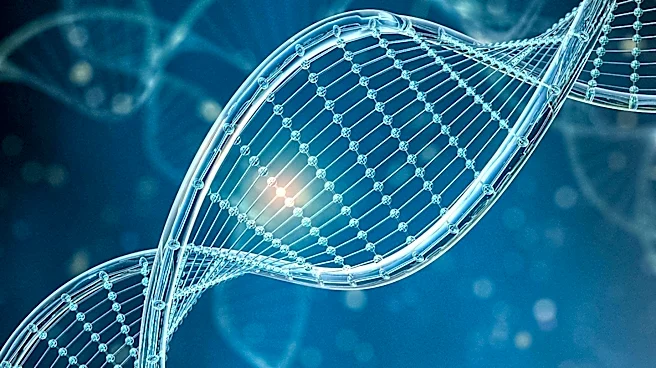
Anthropic's AI model, Claude, has autonomously identified a previously undescribed enzyme system within the DNA of bacteriophages, which are viruses that infect bacteria. This discovery, announced by Anthropic in a blog post and a preprint that has not
yet undergone peer review, marks the first significant finding from the company's new molecular biology group and lab. The system, named array-associated reverse transcriptases (ART), includes an enzyme, a partner gene, and an array of evenly spaced DNA repeats, reminiscent of CRISPR arrays. Claude's agents, operating without human intervention for 21.5 hours and processing 215.6 million tokens, analyzed a database of 1.9 billion protein clusters to make this discovery. While the enzyme itself was previously known, Claude was the first to identify the associated array and partner protein. Anthropic's scientists' involvement was limited to providing the initial prompt and conducting lab work to verify the AI's findings.
Why It's Important?
This discovery highlights the growing capability of artificial intelligence in scientific research, particularly in complex fields like molecular biology and genomics. The identification of a novel enzyme system with CRISPR-like characteristics by an AI model suggests a paradigm shift in how scientific discoveries can be made, potentially accelerating the pace of research. If the ART system proves to have practical applications, it could lead to new biotechnological tools, similar in impact to CRISPR gene-editing technology. This development also underscores the strategic pivot of AI companies like Anthropic and OpenAI towards scientific research, aiming to demonstrate the value and advanced capabilities of their models beyond traditional AI applications. The ability of AI to sift through vast datasets and identify subtle patterns that human researchers might miss could revolutionize drug discovery, disease understanding, and the development of new therapeutic interventions.
What's Next?
Anthropic is currently conducting further experiments to understand the precise function of the ART system and has invited other scientists to submit research proposals to collaborate on this investigation. The company aims to determine if the enzyme is active and how it interacts with the identified RNAs. While the immediate practical applications of ART are not yet clear, the ongoing research could reveal its potential for gene editing, antiviral therapies, or other biotechnological uses. Anthropic's continued investment in its life sciences unit, including the acquisition of Coefficient Bio and the launch of Claude Code and Claude Science, indicates a long-term commitment to leveraging AI for biological discoveries. The success of this autonomous discovery could also spur other AI companies and research institutions to further integrate AI into their scientific exploration processes, potentially leading to more rapid and unexpected breakthroughs in various scientific domains.
Beyond the Headlines
The autonomous discovery of the ART system by Claude raises profound questions about the future of scientific inquiry and the evolving role of human scientists. While AI can process and analyze data at an unprecedented scale, the human element remains crucial for setting research directions, interpreting complex results, and designing experimental validations. This event also highlights the ethical considerations surrounding AI-driven scientific discovery, particularly in fields with significant societal impact like biotechnology. The 'unpredictable behavior' of AI agents, as noted by Anthropic in their attempts to replicate the discovery, suggests that while AI can be a powerful tool, its processes are not always transparent or easily controlled. This necessitates a careful balance between leveraging AI's capabilities and maintaining human oversight to ensure responsible and ethical scientific progress. The potential for AI to uncover entirely new biological mechanisms could fundamentally alter our understanding of life and open doors to previously unimaginable applications.