






What's Happening?
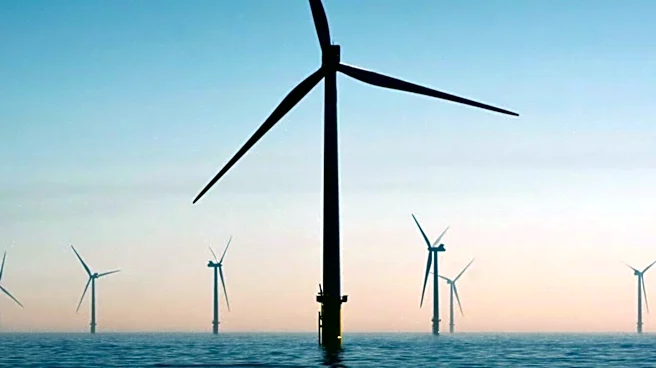
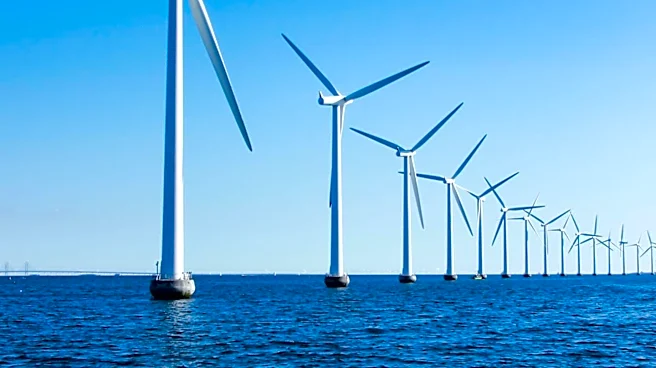
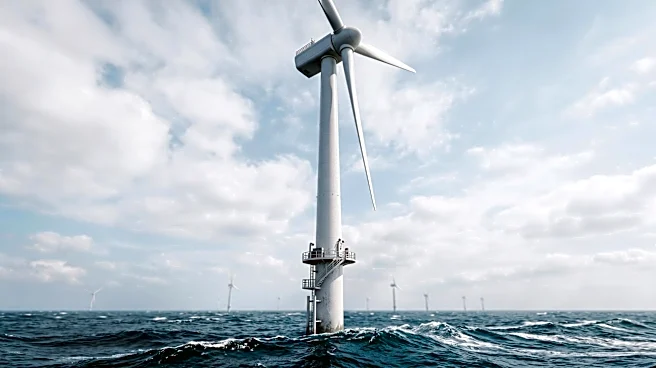
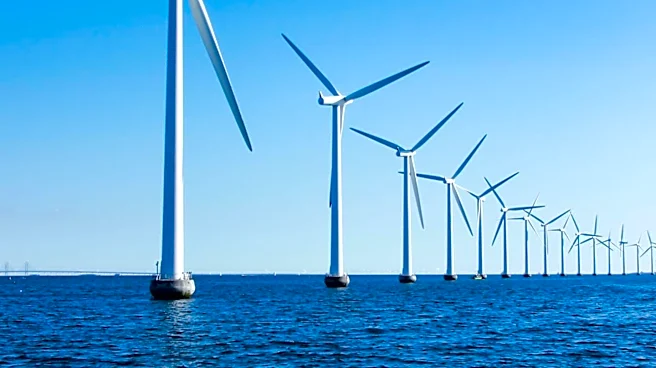
Ørsted's Revolution Wind farm, located in federal waters off Connecticut and Rhode Island, has achieved full commercial operation, with all 65 turbines now spinning under contract. This milestone follows a significant challenge when federal regulators
issued a stop-work order in August of last year, despite the project being approximately 80 percent complete. The developer, Ørsted, had already installed foundations, raised towers, and laid most of the export cable. The halt left substantial infrastructure exposed to marine conditions for months. The reversal of the stop-work order came through a federal court, which granted a second preliminary injunction, allowing construction to resume in mid-January. The project has since delivered its first power in March and reached full synchronization, contributing to a new record for wind power in New England, which peaked at 2,400 megawatts on October 30.
Why It's Important?
The successful commissioning of the Revolution Wind farm is a critical development for the U.S. offshore wind industry, demonstrating resilience in the face of regulatory and legal hurdles. The incident highlights the significant risks and uncertainties developers face, where administrative orders can halt projects even at advanced stages of completion. For Connecticut and Rhode Island ratepayers, the project fulfills long-standing power agreements, providing a new source of renewable energy. The record-breaking wind power output in New England, partly attributed to Revolution Wind, underscores the increasing role of offshore wind in the regional grid and the broader U.S. energy transition. This case serves as a precedent, showing that large-scale offshore wind projects can overcome substantial setbacks and still achieve commercial operation, which could influence future investment and policy decisions in the sector.
What's Next?
Following the successful operation of Revolution Wind, attention will now turn to Ørsted's companion project, Sunrise Wind, which is reported to be nearly 60 percent finished. Its first commissioning is anticipated around the end of this year. The progress of Sunrise Wind will further test the industry's ability to navigate similar challenges and maintain construction schedules. The broader U.S. offshore wind sector will continue to monitor court dockets and regulatory environments, as legal uncertainties persist. Developers will likely seek clearer and more stable permitting processes to mitigate the risks of future stop-work orders. The continued integration of these large offshore arrays into the New England grid will also necessitate ongoing adjustments and enhancements to grid infrastructure to manage increased renewable energy input.
Beyond the Headlines
The Revolution Wind project's journey from a federal stop-work order to full commercial operation reveals deeper implications regarding the interplay between regulatory authority, judicial intervention, and large-scale infrastructure development. The incident underscores the vulnerability of significant capital investments to administrative decisions, even when projects are near completion. It also highlights the critical role of the judiciary in providing checks and balances, enabling projects to proceed when administrative actions are challenged. This case could influence future regulatory frameworks, potentially leading to more robust pre-construction assessments or clearer guidelines for issuing stop-work orders to prevent similar disruptions. Furthermore, the project's resilience could bolster investor confidence in the long-term viability of the U.S. offshore wind market, despite its inherent complexities and regulatory hurdles.