




What's Happening?
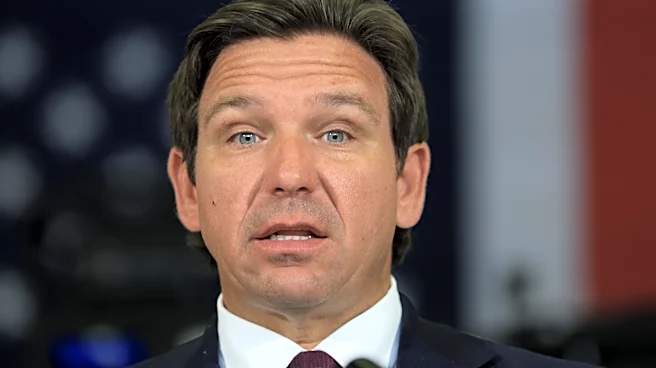
A new law in Florida, known as HB 1217, is set to take effect on July 1, 2026, significantly restricting local governments from pursuing net-zero emission policies. The legislation, backed by Governor Ron DeSantis, prohibits counties and municipalities
from implementing carbon taxes, emission trading programs, or any net-zero policies. This move comes despite several Florida cities, including Miami, Orlando, and Fort Lauderdale, having previously set ambitious goals to achieve net-zero emissions by 2050. The law also prevents local governments from making purchases based on the fuel type of vehicles or appliances and from participating in carbon-trading programs. The Orlando Utilities Commission, a leader in the state's renewable energy efforts, has expressed its commitment to continue reducing carbon emissions despite the new restrictions.
Why It's Important?
The enactment of HB 1217 represents a significant shift in Florida's approach to climate change and energy policy. By limiting local governments' ability to pursue net-zero initiatives, the law could hinder efforts to mitigate climate change impacts, such as rising sea levels and increased hurricane intensity, which are particularly relevant to Florida. The legislation is seen as a victory for fossil fuel interests and a setback for environmental advocates who argue that transitioning to clean energy is crucial for the state's long-term sustainability. The law may also increase energy costs for residents, as local governments are restricted from adopting cost-saving renewable energy measures.
What's Next?
The implementation of HB 1217 may lead to legal challenges from environmental groups and municipalities seeking to maintain their climate initiatives. Local governments might explore alternative strategies to reduce emissions without directly violating the new law. Additionally, the political landscape in Florida could shift as public opinion on climate change continues to evolve, potentially influencing future legislative actions. The law's impact on Florida's energy policies and its residents' utility costs will likely be closely monitored by stakeholders across the state.
Beyond the Headlines
The broader implications of Florida's anti-net zero law highlight a growing tension between state and local governments over climate policy. This development could set a precedent for other states considering similar legislation, potentially affecting national efforts to combat climate change. The law also raises ethical questions about the responsibility of government leaders to address environmental challenges and protect vulnerable communities from the adverse effects of climate change.