







What's Happening?
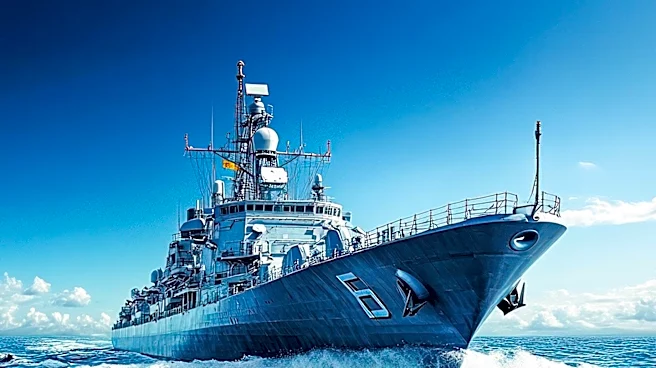
The U.S. Navy and Royal Navy are preparing for 'Atlantic Thunder 26' (AT26), a live-fire exercise scheduled for September in the North Atlantic. The centerpiece of this exercise will be a SINKEX (sinking exercise), where the decommissioned Oliver Hazard
Perry-class frigate, USS Klakring, will be sunk by coordinated attacks from British and American air and naval forces. The exercise, originally planned for May but delayed by four months, aims to test allied weapons, targeting networks, and uncrewed systems in a demanding live environment. USS Klakring, decommissioned in 2013, was towed from Philadelphia to prepare for its transatlantic journey to the exercise area off the QinetiQ Hebrides range in north-west Scotland. Environmental regulations require the removal of hazardous materials from vessels before deliberate sinking.
Why It's Important?
This joint exercise is significant for several reasons. For the U.S. Navy, it continues a tradition of large-scale SINKEX events that validate combat effectiveness and project a clear message of deterrence to potential adversaries. For the Royal Navy, AT26 provides an opportunity to showcase allied strike power and advance the development of uncrewed systems in a realistic, demanding environment. The exercise will test the integration of various weapon systems and targeting networks, enhancing interoperability between the two navies. The use of uncrewed underwater vehicles (UUVs) to survey the wreck will also contribute to the development of new survey technologies and concepts of interoperability in uncrewed underwater operations. This collaboration strengthens the transatlantic alliance and demonstrates a shared commitment to maritime security and defense capabilities.
What's Next?
Following the AT26 exercise in September, the data collected from the SINKEX, particularly from the UUV surveys of the USS Klakring wreck, will be analyzed to evaluate the effectiveness of weapons and the potential of new survey technologies. This analysis will inform future naval strategies and procurement decisions for both the U.S. and Royal Navies. The exercise will also provide valuable insights into the performance of allied weapon systems and targeting networks, potentially leading to refinements in their deployment and integration. The ongoing development of uncrewed systems, as highlighted by their role in AT26, suggests a future where autonomous technologies play an increasingly critical role in naval operations. The successful execution of AT26 will likely reinforce the strategic partnership between the U.S. and UK, potentially leading to further joint exercises and technological collaborations.
Beyond the Headlines
The practice of sinking decommissioned warships in live-fire exercises, while serving military objectives, raises environmental considerations regarding the impact on marine ecosystems, despite efforts to remove hazardous materials. The choice to tow a U.S. vessel across the Atlantic for this purpose, rather than using one of the plentiful decommissioned Royal Navy warships, also highlights logistical and potentially economic factors at play in such large-scale military exercises. Furthermore, these exercises, while demonstrating military prowess, also serve as a form of strategic communication, sending signals to both allies and potential adversaries about the capabilities and resolve of the participating nations. The increasing reliance on uncrewed systems in such exercises points to a broader technological shift in modern warfare, with implications for future naval doctrine and the nature of maritime conflict.