




What's Happening?
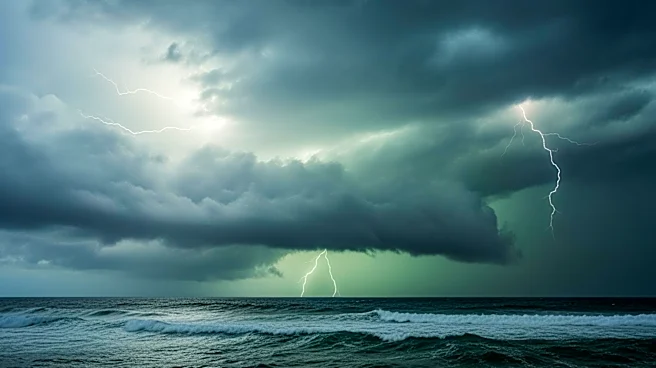
Typhoon Jangmi has caused significant destruction across Japan, with powerful winds and heavy rainfall leading to burst riverbanks, widespread flooding, and landslides. The typhoon made landfall on June 3, affecting regions including Tokyo, Kanagawa,
and Chiba. Despite evacuation orders for over 1.6 million residents, shelters remained largely empty. The storm has damaged homes, infrastructure, and city centers, with some areas recording record rainfall. The typhoon has also disrupted transportation, with roads submerged and highways collapsed, cutting off access to some towns.
Why It's Important?
The impact of Typhoon Jangmi highlights the vulnerability of urban and rural areas to extreme weather events, exacerbated by climate change. The destruction of infrastructure and homes poses significant challenges for recovery and rebuilding efforts. The event underscores the need for improved disaster preparedness and response strategies to protect communities and minimize damage. The economic impact of the typhoon is likely to be substantial, affecting industries, transportation, and local economies. The situation calls for increased investment in resilient infrastructure and effective communication systems to ensure timely evacuations and safety measures.
What's Next?
Authorities are urging residents to remain vigilant for potential landslides and flooding as the ground remains saturated. Recovery efforts will focus on restoring access to affected areas and repairing damaged infrastructure. The government may review and enhance disaster preparedness plans to better handle future extreme weather events. Long-term strategies may include investing in resilient infrastructure and improving early warning systems to mitigate the impact of similar events in the future.