
What's Happening?
NASA has outlined a series of notable astronomical events set to occur in 2026, providing skywatchers with numerous opportunities to observe celestial phenomena. The year will feature a variety of events,
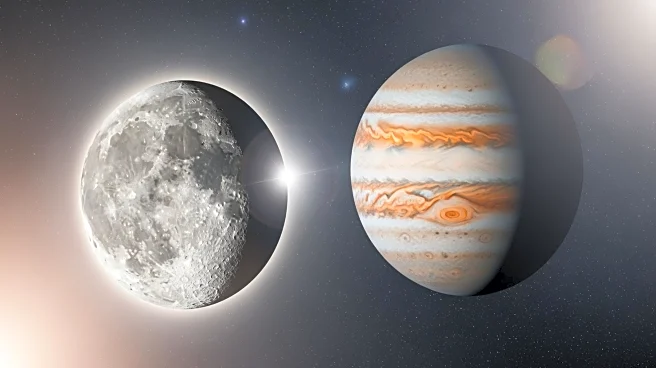
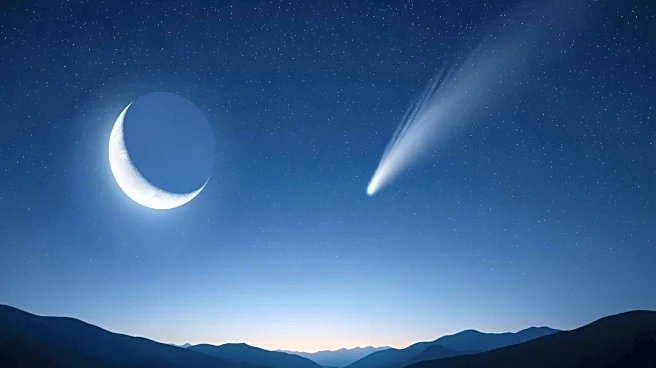
including a planetary parade on February 28, where Mercury, Venus, Neptune, Saturn, Uranus, and Jupiter will be visible shortly after sunset. A total lunar eclipse is expected on March 3, particularly visible from North America. Additionally, a rare Blue Moon will occur on May 31, marking the second full moon of the month. Other significant events include the Venus and Jupiter conjunction on June 8-9, the Perseids meteor shower on August 12-13, and the Geminids meteor shower on December 13-14. The year will conclude with a Supermoon on December 24, coinciding with Christmas Eve.
Why It's Important?
These astronomical events are significant as they offer both amateur and professional astronomers the chance to observe and study celestial bodies and phenomena. Such events can enhance public interest in astronomy and science, encouraging educational activities and community engagement. The visibility of multiple planets and meteor showers provides unique opportunities for scientific observation and data collection, which can contribute to ongoing research in planetary science and meteorology. Additionally, these events can foster a sense of global unity as people worldwide share in the experience of observing the night sky.
What's Next?
As these events approach, NASA and other astronomical organizations are likely to provide further guidance and resources for optimal viewing. Public outreach and educational programs may be organized to maximize engagement and understanding of these phenomena. Observatories and science centers might host special events or viewing parties, offering telescopes and expert commentary to enhance the experience. The anticipation of these events could also lead to increased interest in astronomy-related fields, potentially inspiring future generations of scientists and researchers.