




What's Happening?
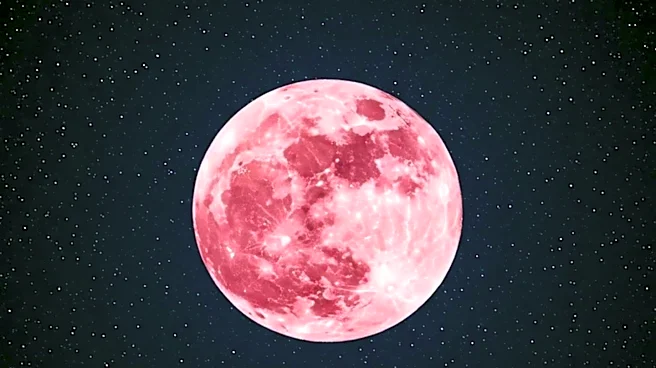
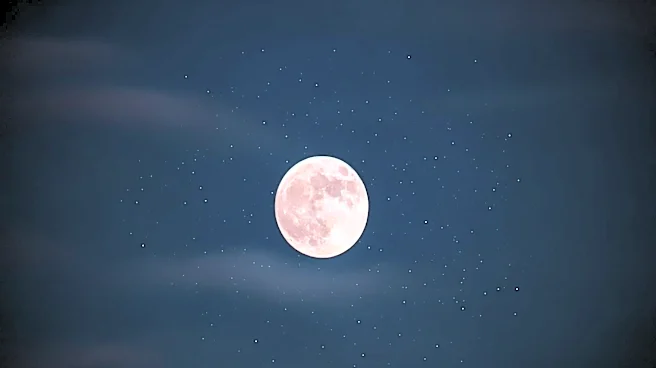
The full moon on Wednesday night, known as the 'Pink Moon,' coincides with significant events such as the Artemis II launch, Passover, and Holy Week. Despite its name, the Pink Moon will not appear pink but is expected to have a yellow-orange hue. The name 'Pink Moon'
is derived from the Phlox subulata wildflower, which blooms in April in eastern North America. This full moon is also referred to by various names by different cultures, such as the 'Breaking Ice Moon' by the Algonquin people, marking the melting of ice, and the 'Moon When the Ducks Come Back' by the Lakota. The moon will rise at 7:12 p.m. and peak at 9:11 p.m. Central time, setting the following morning.
Why It's Important?
The Pink Moon's occurrence during significant cultural and scientific events highlights the intersection of natural phenomena with human activities. The Artemis II mission marks a historic return to crewed lunar exploration, drawing attention to advancements in space exploration. The full moon's timing with Passover and Holy Week underscores the moon's role in cultural and religious calendars. This event serves as a reminder of the moon's influence on human traditions and scientific pursuits, potentially inspiring interest in astronomy and cultural studies.
What's Next?
As the Artemis II mission progresses, public interest in lunar exploration is likely to increase. The mission's success could pave the way for future crewed missions to the moon, influencing space policy and international collaboration in space exploration. Additionally, the cultural significance of the Pink Moon may continue to be celebrated in various traditions, fostering a deeper appreciation for the natural world and its impact on human life.