


What's Happening?
Saeed Al-Aklouk, the water and sanitation control official in the Gaza Strip, has issued a stark warning regarding the severe deterioration of water and environmental conditions in the region. Over 80% of Gaza's water and sanitation networks have been
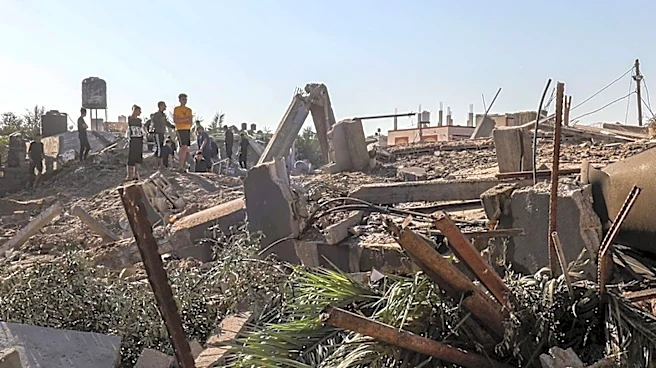
destroyed, leading to a significant decline in water production and an increased risk of contamination. Water production has plummeted from approximately 300,000 cubic meters daily to just 123,000 cubic meters, reducing the per capita water share to between 21 and 22 liters daily. This drastic reduction highlights the extensive damage to the water system and the immense challenges facilities face in repairing damaged infrastructure. The destruction of sanitation networks is causing sewage to leak into the underground aquifer, threatening one of Gaza's primary water sources with contamination. Furthermore, a critical shortage of sterilization materials and limited capabilities for water quality testing exacerbate the risks, making it difficult to ensure water safety and monitor contamination levels.
Why It's Important?
The destruction of Gaza's water and sanitation infrastructure poses a profound humanitarian and environmental crisis. The severe reduction in clean water availability and the widespread contamination risks directly threaten public health, potentially leading to outbreaks of waterborne diseases. The leakage of sewage into the underground aquifer not only compromises the immediate water supply but also has long-term environmental consequences, degrading a vital natural resource. The inability to treat sewage, monitor water quality, and supply sterilization materials creates a cascading effect, where initial infrastructure damage leads to broader public health emergencies and environmental degradation. This situation underscores the critical need for immediate intervention to prevent further humanitarian catastrophe and to address the fundamental requirements for survival and public health in the region. The long-term implications include chronic health issues, environmental damage, and increased dependency on external aid for basic necessities.
What's Next?
The immediate focus will likely be on securing emergency humanitarian aid to address the critical shortage of clean water and sanitation facilities. International organizations and aid agencies will need to prioritize the provision of potable water, water purification tablets, and essential medical supplies to mitigate the health risks associated with contaminated water. Efforts to repair the damaged infrastructure will be crucial, though challenging given the scale of destruction and ongoing operational difficulties. There will also be a need for increased monitoring of water quality and the establishment of temporary sanitation solutions to prevent further environmental degradation and disease outbreaks. The international community will likely face calls to facilitate access for humanitarian organizations and essential materials required for repair and maintenance, as the current situation is unsustainable and threatens to worsen without significant intervention.
Beyond the Headlines
The crisis in Gaza's water and sanitation systems extends beyond immediate humanitarian concerns, revealing deeper issues of infrastructure resilience and the long-term impact of conflict on essential services. The extensive damage highlights the vulnerability of critical infrastructure in conflict zones and the disproportionate effect on civilian populations. This situation raises ethical questions about the protection of civilian infrastructure during hostilities and the responsibility of all parties to ensure access to basic necessities. The environmental consequences, particularly the contamination of the underground aquifer, could have lasting effects on the region's ecological balance and future habitability. The inability to manage sewage and ensure water quality also underscores a broader failure in governance and resource management, pointing to the need for sustainable development strategies and robust international frameworks to protect essential services in vulnerable areas.