
What's Happening?
Researchers from the University of Southampton have discovered that eroded lava rubble beneath the South Atlantic Ocean can trap significant amounts of carbon dioxide (CO2) for millions of years. This
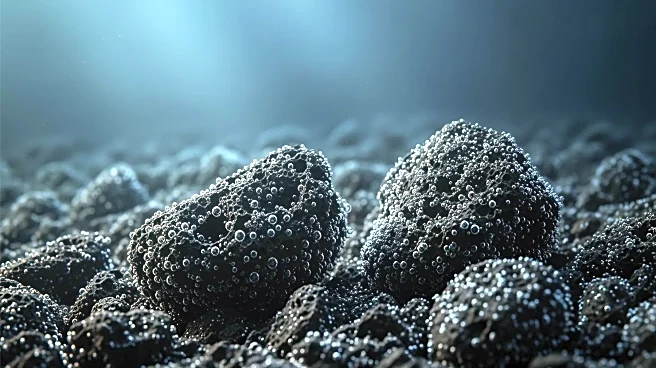
finding was made by examining rock samples formed about 60 million years ago, which revealed that CO2 becomes trapped within layers of lava rubble on the seafloor. These porous breccia deposits, created as underwater mountains erode, act as natural reservoirs for CO2. The study marks the first time these structures have been recognized for their extensive carbon-holding capacity, offering new insights into the long-term carbon cycle. The research highlights how these deposits store CO2 as they are cemented by calcium carbonate minerals formed from seawater interactions.
Why It's Important?
This discovery is significant as it reshapes the understanding of the long-term balance of carbon between the ocean, rocks, and atmosphere. The ability of these breccia deposits to store large volumes of CO2 could play a crucial role in stabilizing Earth's climate over geological timescales. This finding could influence future climate models and carbon management strategies, as it reveals a previously hidden mechanism for carbon storage. The research underscores the importance of geological formations in the natural carbon cycle, potentially impacting environmental policy and efforts to mitigate climate change.
What's Next?
Further research is likely to explore the extent and distribution of these breccia deposits across other oceanic regions. Scientists may also investigate the potential for these natural reservoirs to be utilized or enhanced for carbon sequestration efforts. The findings could prompt a reevaluation of current climate models to incorporate this newly understood carbon storage mechanism. Additionally, policymakers and environmental organizations might consider these insights when developing strategies for carbon management and climate change mitigation.
Beyond the Headlines
The discovery of these CO2 storage capabilities in ocean floor lava rubble highlights the complex interactions between geological processes and climate regulation. It raises questions about the potential for other natural formations to serve as carbon sinks and the role of tectonic activity in the global carbon cycle. This research could lead to a broader understanding of Earth's natural systems and their capacity to buffer against human-induced climate change.